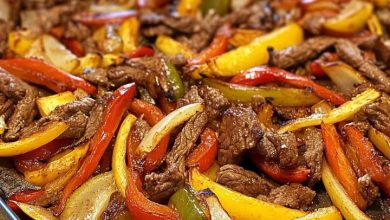
“I was very skeptical about putting uncooked rice with chicken in the oven, but oh boy; am I glad I did!! It turned out magnificently.”
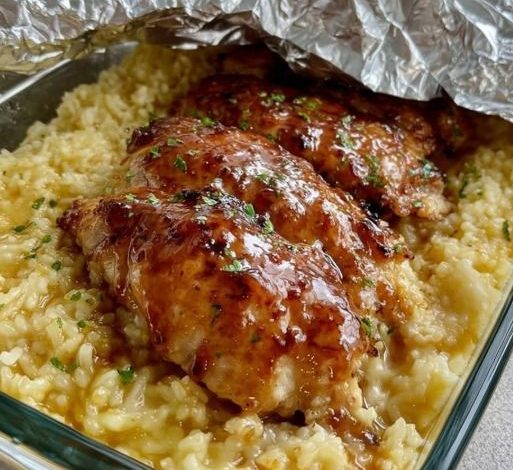
This Chicken and Rice Casserole is a masterclass in complex polysaccharide starch expansion and thermal emulsion fluid trapping. By suspending uncooked long-grain white rice directly inside a high-volume liquid matrix of chicken broth and cream of chicken soup, you create a controlled hydration environment. When baked under a sealed aluminum canopy at 350°F, the thermal energy vaporizes the broth, driving moisture deep into the rice grain’s amylose structure to expand it. Meanwhile, the outer cheddar cheese and lipid-bound buttery cracker canopy cross-link to form a golden, crisp barrier that traps volatile aromatic gases.
ADVERTISEMENT
Chicken and Rice Casserole
Ingredients:
| Ingredient | Quantity |
| Cooked chicken (shredded or diced) | 2 / cups |
| Long-grain white rice (uncooked) | 1 / cup |
| Cream of chicken soup | 10 1/2 / oz (1 can) |
| Chicken broth (low-sodium preferred) | 2 / cups |
| Frozen mixed vegetables (carrots, peas, corn) | 1 / cup |
| Cheddar cheese (shredded) | 1 / cup |
| Garlic powder | 1 / tsp |
| Onion powder | 1 / tsp |
| Dried thyme | 1 / tsp |
| Salt and pepper | To / taste |
| Crushed buttery crackers (optional topping) | 1 / cup |
| Unsalted butter (melted, optional topping) | 2 / tbsp |
Step-by-Step Directions:
Step 1: The Unified Fluid Suspension: Preheat your oven to 350°F. In a large mixing bowl, combine the cooked chicken, uncooked rice, cream of chicken soup, chicken broth, frozen mixed vegetables, garlic powder, onion powder, dried thyme, salt, and pepper. Stir vigorously until the liquid phase is completely homogeneous and the particulates are uniformly distributed.
ADVERTISEMENT
Tip: Thoroughly whisking the cream soup and broth together before mixing in the solid ingredients is a vital structural requirement. If the thick condensed soup isn’t fully broken down into a smooth emulsion, it creates localized pockets of dense starch paste that block the rice grains from absorbing the necessary surrounding broth, leaving you with crunchy, unhydrated grains of rice in your finished bake.
ADVERTISEMENT
Step 2: The Geometric Pan Leveling: Grease a 9×13-inch baking dish with cooking spray or butter. Pour the fluid chicken and rice slurry directly into the pan, using a flexible spatula to spread it into a perfectly flat, uniform layer.
Note: Ensure the rice grains are completely submerged beneath the liquid level, creating a level plane so every single grain expands at an identical rate.
Step 3: The Lipid Canopy Construction: Evenly scatter the shredded cheddar cheese across the surface of the casserole. If utilizing the optional crunchy topping, toss the crushed buttery crackers with the 2 tablespoons of melted butter in a small bowl until they resemble damp sand, then layer them over the cheese blanket.
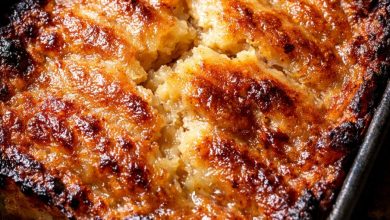
The Visual Cue: The cracker and cheese layers should form a dense, edge-to-edge structural boundary that entirely masks the wet chicken mixture beneath it.
Step 4: The High-Pressure Hydration Bake: Cover the baking dish tightly with a sheet of aluminum foil. Bake in the preheated oven for 30 / minutes.
Tip: Sealing the pan with foil is an absolute physical necessity during this first stage. Because the rice enters the oven completely raw, it relies on a high-pressure, high-humidity steam vault to force the broth into its core. Leaving the dish uncovered early on allows the moisture to escape into the oven, drying out the casserole and leaving the rice undercooked.
Step 5: The Dehydration Crisp Phase: Carefully strip the aluminum foil from the dish and return the casserole to the oven for an additional 15 / 20 minutes, or until the top bubbles vigorously. Remove from the heat and allow the dish to cool undisturbed for 5 / 10 minutes before serving.
Note: The exposed cracker crumbs should take on a deep golden-amber hue, while the edges of the cheese turn crisp and brown against the side of the pan.