Homemade Amish Caramel Corn
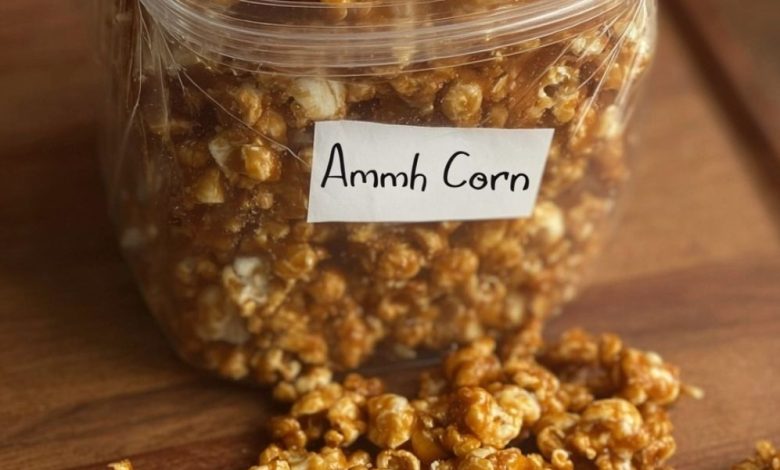
This Homemade Amish Caramel Corn recipe is a masterclass in monosaccharide-disaccharide thermal pyrolyzation and gas-expansion lipid aeration. By boiling butter, brown sugar, and light corn syrup, you create a highly concentrated sucrose-fructose solution. Cooking it to a precise structural window reduces the water content to a minimal fraction. When removed from the heat, the introduction of baking soda triggers an immediate acid-base neutralization reaction with the natural acids in the brown sugar, releasing a sudden matrix of carbon dioxide gas trapped inside the melting butter lipids. This creates a light, foamy caramel foam that coats the delicate popped popcorn kernels without compressing them, hardening into a perfectly brittle, crystalline glaze as it cools.
ADVERTISEMENT
Traditional Homemade Amish Caramel Corn
Ingredients:
| Ingredient | Quantity |
| Popped popcorn kernels | 8 / cups |
| Butter | 1 / cup |
| Brown sugar | 1 / cup |
| Light corn syrup | 1/2 / cup |
| Baking soda | 1/2 / tsp |
| Vanilla extract | 1 / tsp |
| Salt | 1/2 / tsp |
Step-by-Step Directions:
Step 1: The High-Surface Area Matrix Prep: Pop your popcorn kernels using your preferred method until you have a large bowl containing 8 cups of white, fully expanded corn puffs. Ensure any unpopped, dense kernels are completely culled from the volume.
ADVERTISEMENT
Tip: Sorting out the unpopped kernels is an absolute physical safety requirement. Once the thick caramel glaze sets over the corn, unpopped kernels become completely masked by the dark sugar coating, creating a significant mechanical hazard for anyone biting into a handful of the finished snack.
ADVERTISEMENT
Step 2: The Sucrose-Fructose Reduction: In a medium saucepan, melt the butter over low heat. Stir in the brown sugar, light corn syrup, and salt. Bring the mixture to a boil, stirring constantly, until it reaches a thick, glossy, uniform caramel consistency.
Note: The mixture should transition from a grainy, separated lipid-sugar slurry into a smooth, bubbling, unified boiling matrix with an amber hue.
Step 3: The Carbon Dioxide Aeration Flash: Remove the saucepan from the heat source. Instantly drop in the baking soda and vanilla extract, whisking furiously for several seconds. Exercise extreme caution during this step.
Tip: The rapid boiling and swelling of the caramel is a critical chemical milestone. The sodium bicarbonate (baking soda) reacts with the acidic components of the molasses inside the brown sugar, generating millions of micro-bubbles of carbon dioxide gas. This turns the dense, rock-hard sugar syrup into a light, aerated, velvety foam that can spread smoothly over the fragile popcorn without deflating it.
Step 4: The Even Particulate Glaze: Immediately pour the hot, foaming caramel cascade over the bowl of popped corn. Use a long spatula to fold the corn gently from the bottom up until every puff is evenly enveloped in the sugar matrix.
Note: Speed is essential here; as the caramel loses thermal energy, its viscosity increases exponentially, making it difficult to spread uniformly if you delay.
Step 5: The Dehydration Bake & Set: Spread the coated popcorn onto a large baking sheet lined with parchment paper. Bake in a preheated oven (typically 250°F for this style of bake) for 45/60 minutes, stirring every 15 minutes, until the glaze is dry and no longer tacky. Allow it to cool completely before breaking it into pieces.
Tip: The low-temperature oven bake is an efficiency-driven moisture-evaporation window. It gently dries off any remaining moisture from the butter and corn syrup, transforming the sticky coating into a glass-like, snap-heavy crystalline shell that keeps the popcorn intensely crunchy for weeks without turning chewy.