What’s The Deal With Buttons On Opposite Sides?
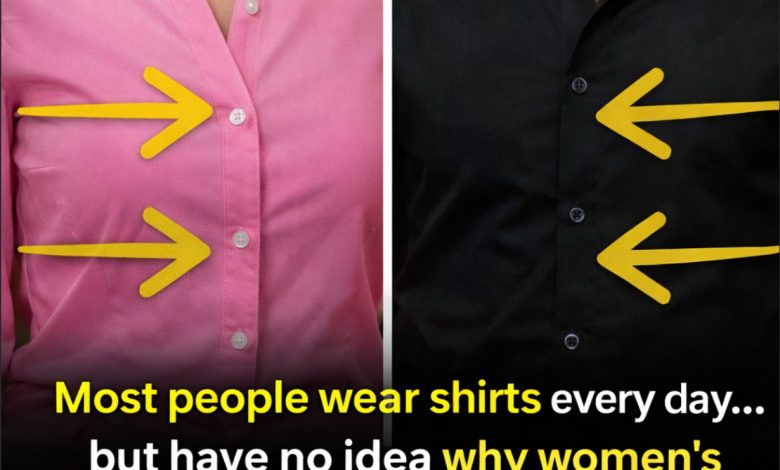
t is a fascinating detail of everyday life that many people never stop to think about: the placement of buttons on our clothing. Most of us simply fasten our coats or shirts without realizing that the side the buttons are on often depends on whether the item was originally designed for men or women.
ADVERTISEMENT
This curious observation often happens by chance. Imagine riding the subway home after a fun night at a concert, wearing what you think are matching denim jackets with a friend. You might suddenly notice a small but distinct difference. While one jacket has buttons on the right side, the other has them on the left. It is the kind of discovery that makes you wonder why such a specific rule exists in the first place, especially since it seems to serve no modern purpose.
ADVERTISEMENT
The Standard in Modern Retail
If you look at the fashion industry today, there is a very clear pattern. In almost all cases, men’s garments feature buttons on the right side, while women’s clothing features them on the left. For anyone who thinks about how gender roles are built into our daily objects, this raises an immediate question about where this tradition started.
ADVERTISEMENT
To find the answer, you have to look back at history, specifically the traditions of the 19th century. During that era, fashion was much more complicated than it is today. Women, particularly those in the middle and upper classes, wore many layers of heavy and intricate clothing. This often included items like petticoats, corsets, and “bustles” (which were structures worn under skirts to add fullness and prevent the fabric from dragging on the ground).
A Tradition Born from Assistance
Because these outfits were so difficult to put on, many women required help getting dressed every morning. According to “Live Science”, it was common for wealthy women to have maids or assistants to help them manage all the ties, fasteners, and buttons.
Since the majority of people are right-handed, it was easier for a maid standing in front of a lady to fasten buttons if they were located on the assistant’s right-hand side. However, once the buttons were placed there for the convenience of the person doing the dressing, they ended up being on the left side from the perspective of the woman wearing the clothes.
Men, on the other hand, generally dressed themselves. Since most men were also right-handed, having buttons on the right side of their own garments made the most sense for them.
Why Does the Habit Persist?
Fashion has changed significantly since the 1800s. Today, women’s clothing is much simpler and easy to put on without any help. We no longer wear heavy layers that require a team to assemble. Despite this, the manufacturing process hasn’t changed this specific detail. We are still making clothes based on social norms from hundreds of years ago rather than focusing on whether the person wearing the clothes is right-handed or left-handed.
For a right-handed person, using a shirt with buttons on the right side is often much more intuitive and faster. This might even explain why some people find themselves reaching for clothes from the men’s section more often; it simply feels more natural to button them up.
Looking Toward the Future
In a world that is becoming more aware of gender equality and moving away from rigid binaries, these old manufacturing habits seem more and more outdated. It raises the question of why big retail brands continue to follow a system that was designed for Victorian-era maids.
Perhaps in the future, we will see a shift where clothing is designed for the comfort and ease of the wearer rather than sticking to historical patterns. It would be a small but meaningful way to break a cycle of history that no longer fits our modern way of living.