The Great Onion Confusion: The Difference Between Green Onions, Scallions, Spring Onions, and Chives (And How to Use Them)
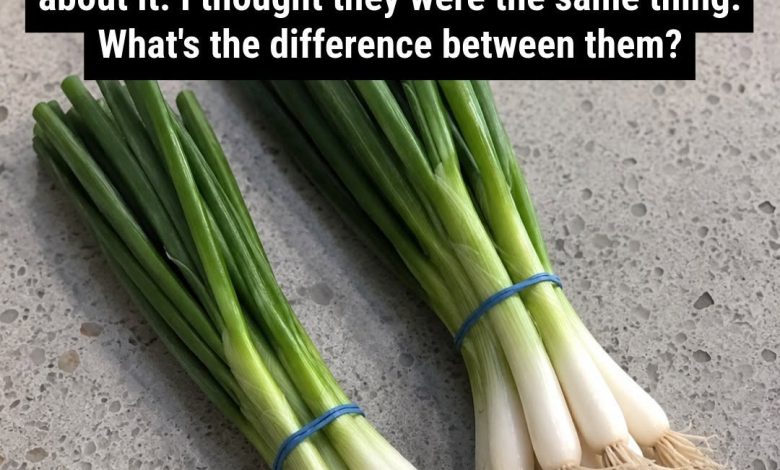
When it comes to home cooking, the humble onion family plays a truly crucial role in enhancing flavors and adding wonderful depth to a wide array of dishes. However, if you have ever stood in the grocery store produce aisle staring at a bundle of long green stalks, wondering if the recipe meant “scallions” or “green onions” or “spring onions,” you are definitely not alone. These terms are frequently used interchangeably in recipes and grocery stores, which causes endless confusion for home cooks everywhere.
ADVERTISEMENT
While these green varieties share a very similar family tree and a beautiful, crisp freshness, there are distinct differences that set them apart from one another. Understanding these subtle nuances can easily elevate your everyday cooking from a simple meal to a deeply comforting, flavorful experience for your family.
ADVERTISEMENT
Let’s explore the unique differences between “scallions”, “green onions”, “spring onions”, and chives, and discover exactly how to use each one to bring out the absolute best in your favorite family recipes.
ADVERTISEMENT
What Are Scallions?
Let’s start with the slender, vibrant stalks that look like little green flags of spring. “scallions” are young onions that are harvested very early in their growth cycle, long before a round bulb has a chance to form at the base. Because they are picked so early, the white part at the bottom of the stalk is slim, straight, and uniform, perfectly matching the width of the bright green tops.
Taste and Culinary Uses
They have a mild, sweet, and wonderfully crisp onion-like taste without the sharp, biting sting of a fully mature onion. This makes them incredibly versatile in the kitchen. They are commonly used in both raw and cooked dishes alike.
-
Raw uses: They add a fresh, bright crunch when tossed into green salads, layered into sandwiches, or sprinkled over egg dishes.
-
Cooked uses: They hold up beautifully in quick stir-fries, warm soups, and fluffy omelets.
-
Preparation tip: Usually, you will slice them diagonally, using every single bit of both the white bottom and the green top.
What Are Green Onions?
If you are standing in the supermarket wondering if “green onions” and “scallions” are the exact same thing, the answer is: usually, yes! In the vast majority of grocery stores, the terms “scallions” and “green onions” are used completely interchangeably to describe the exact same vegetable.
Small Regional Differences
However, in certain regions or at local farmers’ markets, the term “green onion” might be used to refer to a slightly more mature version of a scallion.
-
Appearance: These might feature a very tiny, slightly wider white base instead of a perfectly straight line.
-
Flavor profile: Because they spent just a little bit longer in the ground, they can have a marginally stronger, more pungent flavor.
-
Kitchen uses: They are a major staple in many traditional Asian cuisines, particularly in Chinese and Korean dishes. They are perfect for tossing into sizzling stir-fries, folding into savory dumpling fillings, or sprinkling generously over comforting, warm bowls of noodle soup.
What Are Spring Onions?
Here is where the kitchen confusion usually reaches its peak. While they look quite similar from a distance, “spring onions” are actually an entirely different stage of growth.
“spring onions” are left in the ground much longer than either “scallions” or “green onions”. Because they are given more time to grow before harvesting, they develop a distinct, round, fully formed white bulb at the bottom. This bulb looks like a miniature version of a mature white onion. The long green tops remain hollow and tender, but the distinct white bulb is the real star of the show here.
How They Taste and Cook
Because of that mature bulb at the bottom, “spring onions” carry a much stronger, sweeter, and more pungent onion flavor than a standard scallion.
-
The Green Tops: These can be sliced up and used exactly like scallions to provide a fresh, bright garnish for your meals.
-
The White Bulb: This part should be treated much like a regular onion. You can chop it up and sauté it to create an aromatic flavor base for cozy soups, hearty stews, and comforting casseroles. Alternatively, you can slice them in half and roast them in the oven until they become meltingly sweet and beautifully caramelized.
What Are Chives?
Finally, we come to the delicate, elegant chive. Unlike the other three options we have discussed, chives are not actually an onion vegetable at all. Instead, they are classified as a delicate, leafy herb.
They look like incredibly thin, hollow, dark green blades of grass. They do not possess a white bulb at the bottom whatsoever. When you cut or snip them, they immediately release a very mild, delicate, and slightly garlicky onion aroma.
Best Kitchen Practices
Because their flavor profile is so gentle and subtle, they are almost always used completely raw as a finishing garnish. If you attempt to cook them or subject them to high heat, they will lose their flavor almost entirely.
For many of us, chives instantly bring to mind the nostalgic comfort of a classic egg salad on a slow, quiet morning, or a simple baked potato loaded with sour cream. They are the ultimate “finishing touch” that makes a humble dish feel like a special occasion.
The Substitution Guide: How to Swap Them Safely
When a favorite recipe calls for one of these ingredients but you only have a different one sitting in your refrigerator, there is absolutely no need to panic! Here is your straightforward guide for swapping these ingredients successfully without using a table.
-
If the recipe calls for “scallions” or “green onions” but you only have chives: You can use the chives raw as a beautiful garnish. However, because chives have a much milder taste, you should use a slightly larger handful to get the right flavor. Remember, do not cook the chives!
-
If the recipe calls for “scallions” or “green onions” but you only have “spring onions”: You can use the green tops of the spring onion exactly as you would use scallions. If you decide to use the white bulb part, chop it up very finely and use less of it overall, because that bulb has a much stronger flavor profile.
-
If the recipe calls for “spring onions” but you only have “scallions” or “green onions”: You can certainly use them as a replacement, but your dish will miss out on the sweet, roasted flavor of the mature bulb. To make up for this, simply add a small amount of finely chopped regular yellow onion to the dish alongside your green onions.
-
If the recipe calls for chives but you only have “scallions” or “green onions”: Use only the very top, light green tips of the stalk. Mince them as finely as possible to mimic the delicate, elegant texture of fresh chives.
A Nostalgic Bonus: “3-Ingredient Chive & Cream Cheese Potluck Dip”
Since simple, minimal-ingredient recipes are so wonderful for church potlucks, family gatherings, or just a quiet evening at home with crackers, this unfussy, crowd-pleasing classic is a must-share. It requires almost no effort to make, travels beautifully in a cooler, and perfectly highlights the delicate, nostalgic flavor of fresh chives.
Ingredients:
-
8 oz Cream Cheese, softened to room temperature
-
1/4 cup Sour Cream (or plain Greek yogurt for a tangy twist)
-
3 tablespoons Fresh Chives, finely snipped (plus a little extra for sprinkling on top)
-
Optional: A tiny pinch of garlic powder and a crack of black pepper
Instructions:
-
In a medium-sized mixing bowl, gently fold together the softened cream cheese and the sour cream until the mixture is completely smooth and creamy.
-
Gently fold in the freshly snipped chives, along with the optional garlic powder and black pepper if you choose to use them.
-
Transfer the mixture into a small, nice serving bowl. Smooth out the top surface with a spoon, and sprinkle a few extra pieces of fresh chives right over the center for a beautiful, festive look.
-
Serve the dip immediately alongside sturdy crackers, pretzel crisps, or a platter of fresh veggie sticks.
It is wonderfully creamy, herbaceous, and stands as the exact kind of fuss-free, comforting appetizer that naturally brings people together around a kitchen table.