Wowza, I never knew a recipe could taste this good and be so simple! 2 ingredients is all you need!
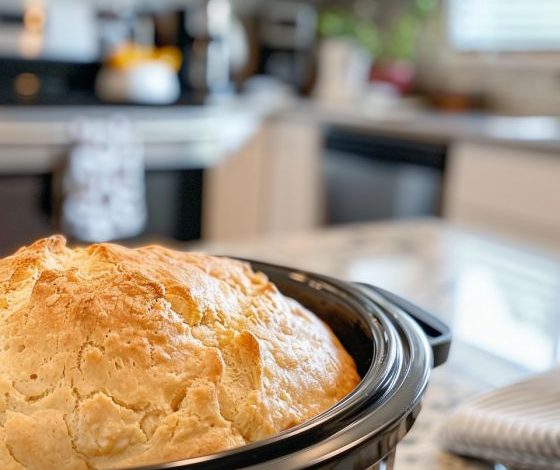
This 2-Ingredient Slow Cooker Beer Bread is a fascinating example of “yeast-free” baking that utilizes the carbonation and natural ferments in beer to provide the lift. By combining self-rising flour with a 12-ounce beer, you bypass the need for proofing or kneading. The slow cooker acts as a controlled proofing box and oven in one, using trapped steam to keep the bread incredibly moist while it develops a dense, rustic crumb. The result is a hearty, slightly tangy loaf that mimics the texture of an artisanal sourdough with almost zero technical effort.
ADVERTISEMENT
2-Ingredient Slow Cooker Beer Bread
Ingredients:
| Ingredient | Quantity |
| Self-rising flour | 3 cups |
| Beer (any variety) | 12 oz (1 can) |
Step-by-Step Directions:
Step 1: The Carbonation Mix: In a large bowl, whisk the flour and beer until just combined. It is perfectly normal for the batter to be sticky and a bit lumpy.
ADVERTISEMENT
Tip: Not overmixing is a vital mechanical step. Self-rising flour contains chemical leaveners that react the moment they hit the liquid. If you overwork the dough, you’ll knock out the tiny air bubbles created by the beer’s carbonation, resulting in a dense, “brick-like” loaf rather than a light, airy one.
ADVERTISEMENT
Step 2: The Crock Preparation: Grease the inside of the slow cooker generously with butter or line it with parchment paper.
Tip: Using parchment paper is a “structural” necessity. Because slow cooker bread doesn’t develop a hard, dry crust like oven-baked bread, it can be quite delicate when hot. A parchment “sling” allows you to lift the entire loaf out safely without it crumbling or sticking to the ceramic sides.
Step 3: The High-Heat Bake: Transfer the dough into the crock. Cover and cook on HIGH for 1 1/2 / 2 hours.
The Visual Cue: The bread is ready when the top is matte and firm to the touch, and a toothpick inserted into the thickest part comes out clean.
Step 4: The Cooling Phase: Carefully lift the loaf out and let it cool on a rack before slicing.
Tip: Cooling is a “viscosity” necessity. While the bread is hot, the starches are still “gelatinized” and soft. If you slice it immediately, the steam will escape too fast, and the bread will compress into a gummy texture. A 20-minute rest allows the structure to “lock” in place.