The very best I’ve ever tasted! It’s my dad’s favorite dessert, but he’s never…
ADVERTISEMENT
Ingredients:
| Ingredient / Component | Quantity |
| For the Bread Pudding Base: | |
| Stale challah bread (cut into cubes) | 1 / loaf |
| Eggs | 5 / pieces |
| Whole milk | 2 / cups |
| Heavy cream | 2 / cups |
| Vanilla extract | 1 / tablespoon |
| White sugar | 1/2 / cup |
| Cinnamon (for custard mix) | 1 / tablespoon |
| For the Plumped Raisin Mixture: | |
| Raisins | 1 / cup |
| Water | 1 / cup |
| Butter | 2 / tablespoons |
| Cinnamon (for raisin pot) | 1 / teaspoon |
| For the Sweet Cinnamon Glaze: | |
| Powdered sugar | 1 / cup |
| Vanilla extract | 1 / teaspoon |
| Milk | 2 / tablespoons |
| Cinnamon (for glaze) | 1/2 / teaspoon |
Step-by-Step Directions:
Step 1: Prep the Oven and Baking Vessel: Preheat your oven to 350°F (175°C). Lightly grease a standard 9×13 / inch baking dish with a bit of butter or non-stick spray to anchor the pudding base and prevent sticking.
ADVERTISEMENT
Step 2: Plump and Hydrate the Fruit: In a small saucepan over medium-high heat, combine your 1 cup of raisins, 1 cup of water, 2 tablespoons of butter, and 1 teaspoon of cinnamon. Bring the liquid to a rolling boil. Continue cooking until the raisins plump up and expand to about double their original size, absorbing the spiced liquid, then remove from heat.
ADVERTISEMENT
Step 3: Whisk the Rich Spiced Custard: In a large mixing bowl, thoroughly whisk together your 5 eggs, 2 cups of whole milk, 2 cups of heavy cream, 1 tablespoon of vanilla extract, 1/2 cup of white sugar, and 1 tablespoon of cinnamon until completely smooth. Pour the warm plumped raisin mixture—including any residual spiced water remaining in the saucepan—directly into the egg custard bowl, whisking continuously to incorporate.
Step 4: Execute the Starch Hydration Soak: Add your cubed stale challah bread into the large bowl of egg custard. Stir gently with a large spoon or spatula until every single bread cube is fully coated and submerged in the liquid.
The 10-Minute Starch Saturation Tip: Do not skip or shorten this soaking period! Allowing the bread to rest undisturbed for a full 10 / minutes is the ultimate secret to bread pudding success. It gives the dried-out starch structure enough time to completely saturate with the cream and eggs, preventing dry, spongy patches in the center of your bake.
Step 5: First Stage Foil Bake: After the 10-minute soak, transfer the moist bread mixture into your prepared baking dish, smoothing it out evenly. Cover the top of the dish tightly with a sheet of aluminum foil. Slide it onto the middle rack of your oven and bake covered for 50 / minutes to cook the internal custard through.
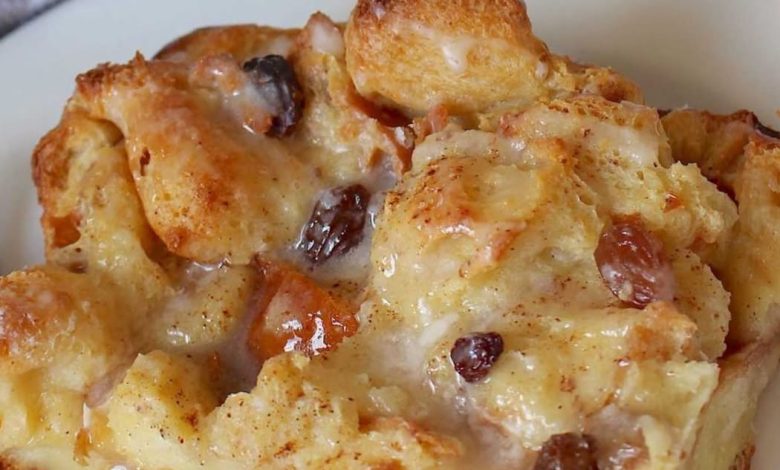
Step 6: Second Stage Crust Crisping: Carefully pull the foil off the baking dish, exposing the top of the bread pudding. Return the uncovered dish to the oven for an additional 10 / to 15 / minutes until the exposed bread peaks turn a deep, crispy golden brown.
Step 7: Whisk the Ribbon Glaze: While the pudding finishes its final minutes in the oven, prepare your topping. In a small bowl, briskly whisk together your 1 cup of powdered sugar, 1 teaspoon of vanilla, 2 tablespoons of milk, and 1/2 teaspoon of cinnamon until it forms a perfectly smooth, glossy, cascading glaze.
Step 8: Glaze and Rest Before Service: Remove the bread pudding from the oven. Drizzle the sweet cinnamon glaze evenly across the entire surface of the hot bread pudding while it is still warm. Let the pudding rest for about 5 / minutes to settle and lock in the juices before slicing and serving.