The Chair on the Corner: Understanding Pittsburgh’s Quirky Parking Space Tradition
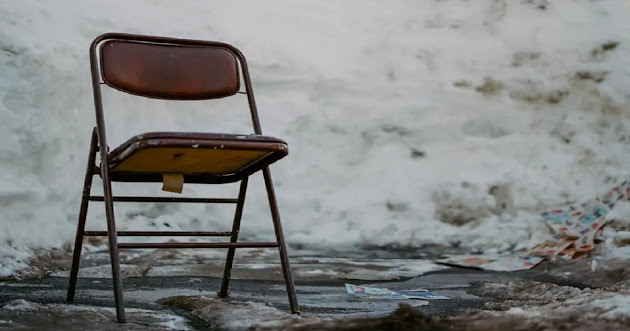
If you have ever driven through the city of Pittsburgh during the cold winter months, you have likely witnessed a very unusual sight. You might spot an old plastic lawn chair, a heavy wooden dining room seat, or even a worn-out living room recliner sitting completely alone on the side of the road. These random pieces of furniture are not left out for the garbage collector. Instead, they stand like quiet guards inside a freshly cleared parking space right next to the curb.
ADVERTISEMENT
When outsiders see this for the very first time, they are usually filled with confusion. It is easy to wonder if a local homeowner is trying to sell their old furniture on the sidewalk. You might guess that the items accidentally fell off the back of a moving truck, or you might simply wonder why anyone would leave a perfectly good seat in the middle of a public street.
ADVERTISEMENT
However, if you approach a local resident and ask them what is going on, they will probably just give you a knowing smile and tell you: “That spot’s taken.”
ADVERTISEMENT
This simple phrase introduces you to one of the most famous, unusual, and deeply rooted traditions in the entire city of Pittsburgh. It is the widespread custom of saving your hard-earned parking spot using a household chair after a major winter snowstorm.
To an outsider, this habit seems incredibly quirky. From a legal standpoint, it is actually against the law. Yet, despite those facts, it is a winter practice that perfectly shows the strength, the deep community spirit, and the clever, practical nature of the local people. These are residents who truly know how to handle the toughest challenges that the winter season can throw at them.
Let us take a closer look into the fascinating history behind this missing piece of furniture, and find out exactly why the people of Pittsburgh refuse to give up this unique custom.
The Tradition Explained: Why Chairs Mark Parking Spots
When a heavy blanket of winter snow falls across the neighborhoods of Pittsburgh, the local residents immediately face a very difficult and exhausting challenge. They must find a way to clear out a usable space to park their vehicles.
This process involves a lot more than just brushing a few inches of powder off your own car windows. To actually secure a place to park when you return home later in the day, you have to physically shovel out an entire parking space along the side of the public road. In many cases, this means moving several feet of heavy, packed snow.
It is incredibly difficult physical labor. It frequently requires anywhere from thirty minutes to a full hour of intense, back-breaking work while standing out in freezing temperatures.
Because of this immense effort, an unwritten community agreement has developed over many generations. The typical sequence of events follows a very specific pattern:
First, a winter storm arrives and drops a significant amount of snow. To give you an idea of the scale, Pittsburgh receives an average of about 44 inches of snow every single year.
Next, the local residents pick up their shovels and go to work. A homeowner will spend a long time clearing out not just their own automobile, but the entire public parking space surrounding it.
Once the space is completely clear and the resident needs to drive away to go to work or run errands, a household marker appears in the empty gap. This object is most frequently a standard chair, but locals will also use traffic cones, empty plastic trash cans, or old wooden ladders.
This object sends a very clear, silent message to every other driver on the block: “I cleared this. Please respect my work.”
Finally, the rest of the neighborhood honors the request. The vast majority of people who live in the city deeply respect the presence of the marker, choose to keep driving, and look for an entirely different place to park their own vehicles.
Key insight: This practice is not born out of a sense of selfish entitlement. Instead, it is completely based on a local idea of basic fairness. The community firmly believes that if you put in the hard physical labor to dig out a usable space, you completely deserve to enjoy the reward of that effort.
The Origins: A Practical Solution to a Winter Problem
While historians and local residents do not know the exact calendar year when this unusual habit first started, almost everyone agrees that it came out of absolute necessity. The city has a unique combination of geographic and social features that made this custom unavoidable.
To start, many of the older neighborhoods feature incredibly narrow streets where vehicle parking is already very limited on a regular day. When you combine those tight spaces with heavy winter snowstorms that drop massive amounts of powder all at once, the situation becomes very difficult.
Furthermore, the city government does not typically provide immediate snow removal services on the smaller residential side streets. Because of this, the people living on those blocks must rely on themselves to clear out areas to park. This environment has created incredibly strong community values, where neighbors constantly look out for one another and respect each other’s daily struggles.
The basic logic behind using a piece of furniture makes perfect sense when you look at the daily problems residents face. For example, if you spend an hour shoveling out a pristine spot and then have to leave to pick up groceries, there is a very high chance that another driver will slide right into your clean space while you are gone.
Since the local government does not have an official system to let you reserve a public street spot, the residents had to invent their own informal, highly visible marking system. Without this custom, there would be constant arguments and fighting between neighbors on the block. The presence of the furniture establishes a peaceful community standard of mutual respect. It ensures that a person’s hard physical work does not go unrewarded, because the object acts as visible proof of your hard labor.
Unlike many other major American cities that use large fleets of city trucks to aggressively plow every single side street after a storm, many neighborhoods here depend entirely on the residents to make the streets usable. The unofficial custom simply steps in to fill a major gap left by official city policies.
The Legal Reality: Technically Illegal, Practically Accepted
This is the point where the entire tradition becomes truly fascinating. From a strict legal standpoint, it is completely against the law to try to reserve a public parking space on a city street using a lawn chair, a traffic cone, or any other household object. The official city code clearly states that individuals are not allowed to claim exclusive ownership over public property.
However, the real-world twist is that the actual enforcement of this law by local authorities is almost completely non-existent.
The official stance of the city is that public streets operate on a first-come, first-served basis, and any chair left in the road is considered an illegal obstruction. In theory, the local police force has the right to drive around, confiscate the markers, and issue fines to the violators.
But the unofficial reality on the ground is completely different. The local community norm dictates that you must respect the person who did the shoveling. The police and city leaders view the lonely chair as a positive symbol of hard work rather than an illegal piece of trash. Because of this understanding, officers almost never intervene in the situation, and getting an official fine for saving a spot is incredibly rare.
Why do the authorities show so much leniency toward this practice? The truth is that police officers and city officials fully understand the deep cultural meaning behind this lifelong custom. As long as the household objects do not block emergency vehicles or create a dangerous safety hazard in the middle of a busy intersection, they are widely tolerated. The city views them as a peaceful, community-based solution to a very stressful practical problem.
Chair Chronicles: Stories from the Street
Over the many decades that this custom has been alive, it has created countless legendary stories across the city. Some of these tales are incredibly heartwarming, some are absolutely hilarious, and all of them show the true spirit of the local community.
Tale #1: The Recliner Upgrade
“I put out my old, beaten-up recliner to save my spot after a blizzard. When I came home, it was gone. I panicked—until I saw a brand-new lawn chair in its place. My neighbor had ‘upgraded’ my marker to keep the tradition alive. That’s Pittsburgh spirit.”
Tale #2: The Skeptic Converted
“I moved here from out of state. Saw a chair in a spot and thought, ‘No way.’ I parked there anyway. The neighbor came out, and I braced for a fight. Instead, he laughed, told me the story, and we ended up talking Steelers for an hour. Now I respect the chairs—and I’ve got friends on the block.”
Tale #3: The Creative Markers
“I’ve seen chairs, sure. But also: ladders, trash cans, old toilets, kiddie pools filled with snow, even a full-size couch. One guy put out a mannequin. The creativity is half the fun.”
The Etiquette: How to Navigate Chair Culture
If you are a newcomer who just moved to the area, or if you are simply a visitor who is feeling unsure about how the system works, it helps to know the unwritten rules of etiquette. Following these simple guidelines will keep you on great terms with your new neighbors.
The Do’s:
-
Always respect the presence of chairs and other markers immediately following a heavy winter snowstorm.
-
Take a moment to appreciate the intense physical labor that someone had to perform to clear out that specific space.
-
Feel free to use your very own household chair to save a spot if you were the one who spent time shoveling it out.
-
Offer a warm thank you to any neighbors on your block who spend their time clearing away spaces for cars.
-
Fully embrace this unique custom as a wonderful sign of local community pride and neighborhood spirit.
The Don’ts:
-
Never move or touch another person’s furniture marker just so you can park your own vehicle there.
-
Avoid complaining to the local police department about a chair unless the object is causing a genuine, dangerous safety hazard to driving traffic.
-
Never pull your car into a clean parking space that currently features an active furniture marker.
-
Do not assume that these chairs are socially acceptable to use all year round, because they are absolutely not meant for warm weather.
-
Never leave your household markers sitting out in the road after the winter weather breaks and the snow completely melts away.
Knowing exactly when it is acceptable to use a marker is also a major part of the custom. It is generally looked upon favorably if you place a marker within 24 to 48 hours right after a major snowstorm has occurred. The spot must be very clearly shoveled by hand, and the marker you choose must be highly visible and completely safe for passing traffic. These rules apply heavily in residential neighborhoods where the custom has been established for decades.
On the other hand, you should completely ignore these markers if weeks have passed since the last snowfall and all the ice has already melted away. You should also never try to save spots on major main highways or busy commercial business streets. Furthermore, if a marker is causing a hazard, or if you hold an official government documentation like a physical disability parking permit that requires access, the unwritten chair rules do not apply.
Pro tip: If you ever find yourself feeling confused or unsure about a specific spot on a street, simply ask one of the nearby neighbors for advice. The people of this city absolutely love explaining their local customs to outsiders, and they will deeply appreciate the fact that you took the time to show respect for their traditions.
Beyond Pittsburgh: Where Else Does This Happen?
While the city is incredibly famous for this winter habit, it is definitely not the only place where residents use household objects to claim their shoveled spaces. In fact, very similar customs can be found in several other major cities across the northern parts of the United States that experience heavy winter weather.
In Boston, Massachusetts, residents frequently use plastic lawn chairs or wooden sawhorses to hold their spots, and the locals simply refer to the practice as “saving the spot.”
If you travel to Chicago, Illinois, you will see people using chairs, wooden ladders, and large metal trash cans. In that city, the tradition has a very famous official local name, and everyone refers to it as “Dibs.”
Further east in Philadelphia, Pennsylvania, neighbors utilize standard household chairs and bright orange traffic cones to secure their areas, calling the practice “spot saving.”
Up in the snowy region of Buffalo, New York, residents will grab absolutely anything available in their garages to block out a space, and the community refers to this informal system as “snow etiquette.”
Finally, in Cleveland, Ohio, you will regularly see chairs and plastic trash cans holding spots under an unwritten neighborhood agreement known to locals as “the chair rule.”
This entire phenomenon is a fascinating regional habit. It is most commonly found in older historic cities across the American Northeast and Midwest. These are places that share the exact same traits: tight and narrow residential streets, heavy annual winter snowfall, and a long-standing reliance on individual residents to clear out their own paths through the ice and snow.