Did you know that having visible veins means you are…
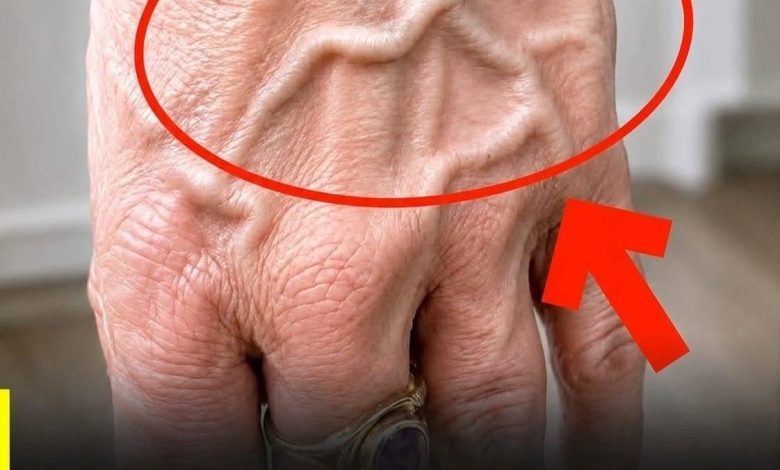
Have you ever had a moment where you are just sitting quietly, looking down at your hands, and suddenly noticing them? You might see delicate blue or green lines resting just beneath your skin, looking much more pronounced than you ever remember them being. For a lot of people, making this sudden observation sparks a very quiet, worried question in their minds—”Is this normal?”
ADVERTISEMENT
The good news is that you can take a deep breath. The reassuring truth is that visible hand veins are overwhelmingly common. In the vast majority of cases, they simply reflect natural, healthy changes happening in your body, rather than a reason to panic or worry. Let’s take a closer, relaxed look at what your hard-working hands might be gently trying to tell you.
ADVERTISEMENT
1. The Natural Journey of Getting Older
As the years go by, our skin goes through a lot of natural changes. One of the biggest shifts is that our skin slowly loses collagen and its natural bounce or elasticity. At the same time, the protective layer of subcutaneous fat that sits just under the surface of our skin starts to thin out.
ADVERTISEMENT
Because there is less of a natural cushion between your skin and your blood vessels, your veins naturally start to become much more visible to the naked eye. This is a completely normal part of having maturing skin. Our hands often show these signs of aging much earlier than other parts of our bodies simply because they are constantly exposed to the sun, and we use them non-stop for almost everything we do.
2. Your Fitness Levels and Body Composition
If you are someone who exercises a lot or has a naturally lean body type, you will probably notice your veins more often than others do. When there is less body fat sitting between your skin and your blood vessels, the vascular structures underneath are always going to show up much more clearly.
Also, when you are exercising or doing heavy lifting, your body increases its blood flow to deliver oxygen to your muscles. This causes your veins to temporarily expand to handle all that extra work. This specific phenomenon is called “vascularity”, and it actually shows that you have a robust, healthy circulatory system, rather than pointing to any kind of medical pathology.
3. Changes in Weather and Hydration
Did you know that the temperature outside can actually change how your hands look? When it is hot out, your blood vessels naturally dilate, or widen. This is your body’s clever way of helping you release trapped body heat to cool down—and as a result, it makes your veins much more noticeable.
Not drinking enough water can also make your veins pop out more. Dehydration slightly reduces the volume of your blood and makes your skin appear thinner and less plump. Thankfully, both of these effects are very temporary. Once you cool down in the air conditioning or drink a big glass of water, your veins will usually go back to hiding quietly under the surface.
4. Your Genetics and Natural Skin Tone
Sometimes, the answer is just built right into your DNA! Some folks naturally have much more visible veins simply because of inherited traits passed down through their family tree. If you have a lighter skin tone, the visual contrast is much greater, making blue and green veins stand out sharply against your complexion. People born with naturally thinner skin will also see their veins more easily.
Take a look at your parents or your siblings. If they have prominent hand veins, there is a very high chance that yours will follow suit. It is simply a matter of your family biology, not an imbalance in your health.
When You Should Pay a Little Closer Attention
While seeing your veins is almost always completely harmless, it is still very important to listen to your body. You should reach out to a trusted healthcare provider if you happen to notice any of the following warning signs:
-
Sudden, completely unexplained swelling or strange bulging in the area.
-
Veins that feel unusually warm, tender, or painful when you gently touch them.
-
Redness, skin discoloration, or a hardened, rope-like texture running along a vein.
-
Persistent, lasting changes in the size or shape of your veins without any clear cause.
These rare signs could occasionally point to superficial thrombophlebitis (which is a type of vein inflammation) or other vascular conditions that a doctor should evaluate. However, if your veins are just visible—without any pain, discomfort, or rapid changes—you are generally completely in the clear.
A Sign of Vitality, Not a Weakness
In almost all cases, having visible hand veins simply reflects a healthy, working circulatory system doing exactly what it was designed to do: efficiently pumping deoxygenated blood back up to your heart. They are absolutely not a flaw to be hidden away. Instead, they are a quiet testament to your body’s brilliant, intricate design.
Try to think of them like gentle topography on a map—little rivers on a landscape that has been shaped by time, everyday movement, and life itself. They tell a beautiful story of resilience. They belong to hands that have held loved ones, created beautiful things, comforted others, and carried you safely through all your years of living.
Your body communicates with you in very subtle ways every single day. While visible veins rarely signal any kind of distress, they do invite a moment of mindfulness. Notice the changes in your body without jumping to alarm. Honor your body’s natural evolution without any harsh judgment. And, of course, whenever you find yourself in doubt, seek gentle guidance from a medical professional.
Because the most profound health wisdom often lies not in fear, but in peaceful understanding: What looks different isn’t always wrong. Sometimes, it’s simply you—aging with grace, moving with incredible strength, and living with true vitality.
Important Note: This article is designed to offer general wellness and lifestyle information. It should never replace professional medical advice. Always consult a certified healthcare provider if you have any sudden changes or concerns about your personal health.