Aunt Barbara used to bring this to every springtime gathering and it was always the first thing to disappear. I finally got her to share her secret to
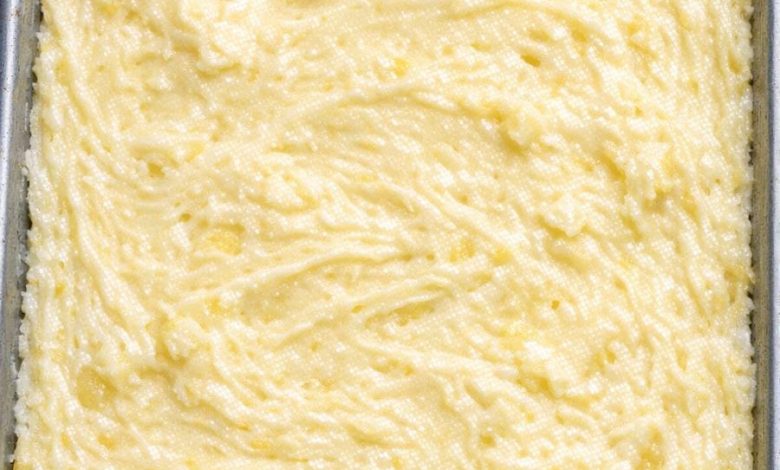
This Lemon Sheet Cake with Pudding Mix is a masterclass in starch-complexing and lipid-based crumb stabilization. By integrating instant lemon pudding mix directly into a yellow cake mix, you introduce modified cornstarch and sodium phosphates. These ingredients act as “moisture-anchors,” bonding with the whole milk and neutral oil to create a dense, “custardy” matrix that resists the staling process. The addition of lemon zest provides a hit of limonene oils, which offers a bright, aromatic top-note to balance the deep, vanilla-yellow base.
ADVERTISEMENT
Lemon Sheet Cake with Pudding Mix
Ingredients:
| Ingredient | Quantity |
| Yellow cake mix | 1 box (15.25 oz) |
| Instant lemon pudding mix | 1 box (3.4 oz) |
| Whole milk (cold) | 1 cup |
| Neutral oil | 1/3 cup |
| Large eggs | 3 |
| Granulated sugar | 1/2 cup |
| Vanilla extract | 1 tsp |
| Lemon zest | 1 tbsp |
Step-by-Step Directions
Step 1: The Dry Homogenization: Preheat your oven to 350°F. Whisk the dry cake mix and instant pudding mix together in a large bowl.
ADVERTISEMENT
Tip: Whisking the dry ingredients is a vital mechanical step. Instant pudding mix is highly hygroscopic (it attracts water). If it isn’t evenly distributed through the cake mix before adding liquids, it can form “gel-clumps” that result in uneven, gummy spots in the finished cake rather than a uniform, tender crumb.
ADVERTISEMENT
Step 2: The Emulsion Phase: Whisk the milk, oil, eggs, sugar, and vanilla in a separate bowl until the sugar is mostly dissolved.
Tip: Dissolving the sugar in the wet ingredients is a chemical necessity. Sugar is a “liquefier” in baking; by ensuring it is dissolved before hitting the flour, it more effectively interferes with gluten development, ensuring the cake remains “soft and springy” rather than “bread-like” or tough.
Step 3: The Batter Integration: Combine the wet and dry mixtures with the lemon zest. Beat for 2 minutes on medium speed until the batter is glossy and thick.
Tip: The “2-minute beat” is a structural necessity. This duration allows the proteins in the eggs to begin a stable aeration process while ensuring the modified starches in the pudding mix have enough time to “hydrate” and thicken the batter before it enters the oven.
Step 4: The Swirl & Bake: Spread the batter into a greased 9×13-inch pan. Use a spatula to create loose swirls on top. Bake for 28/34 minutes.
Note: The cake is ready when the center is softly set (with a slight jiggle) and a toothpick comes out with “moist crumbs.” Over-baking will destroy the custardy texture provided by the pudding mix.
Step 5: The “Set” Rest: Cool the cake completely in the pan on a wire rack before slicing.
Tip: This rest is a “viscosity” necessity. Much like a real pudding, this cake relies on retrogradation—the process where starch molecules realign as they cool. If you cut it while hot, the interior may appear “underbaked” or wet. Cooling allows the crumb to firm up into its signature moist, velvety texture.