My family frequently asks for this casserole. It’s a real winnner!
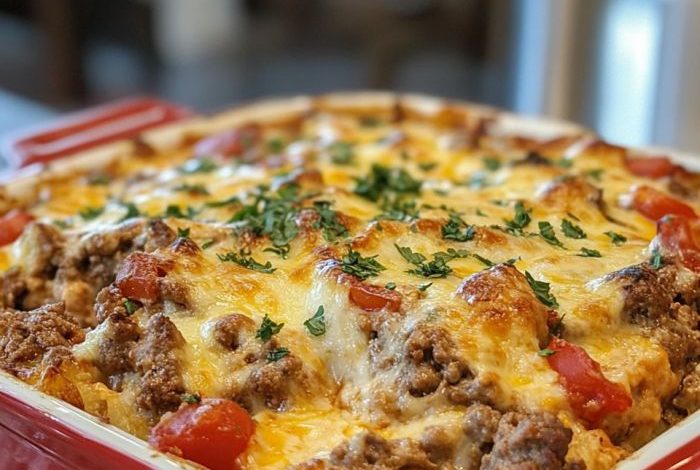
This Beef Lombardi Casserole is a masterclass in multi-tier structural stratification and thermal lipid-acid emulsion stability. By simmering ground beef with diced tomatoes, tomato paste, and tomato sauce, you construct a highly concentrated, lycopene-rich tomato-meat reduction that locks in volatile herb aromatics. In a parallel phase, blending cooked elbow macaroni with sour cream and cottage cheese creates a dense, lactic protein barrier around the wheat starches. When layered and baked at 350°F, the high-viscosity dairy emulsion slows down liquid migration from the acidic tomato layers, preventing the noodles from water-logging while the surface cheddar cheese cross-links into a bubbling, molten canopy.
ADVERTISEMENT
Beef Lombardi Casserole
Ingredients:
| Ingredient | Quantity |
| Ground beef | 1 / lb |
| Medium onion (chopped) | 1 / unit |
| Garlic cloves (minced) | 2 / units |
| Diced tomatoes (undrained) | 14 1/2 / oz (1 can) |
| Tomato paste | 6 / oz (1 can) |
| Tomato sauce | 8 / oz (1 can) |
| Salt | 1 / tsp |
| Black pepper | 1 / tsp |
| Dried oregano | 1 / tsp |
| Dried basil | 1 / tsp |
| Elbow macaroni (cooked) | 2 / cups |
| Cheddar cheese (shredded) | 2 / cups |
| Sour cream | 1 / cup |
| Cottage cheese | 1 / cup |
Step-by-Step Directions:
Step 1: The Lipid-Reduction Sauté: Preheat your oven to 350°F. In a large skillet, cook the ground beef over medium heat until completely browned, then drain off any excess rendered fat. Add the chopped onion and minced garlic directly to the meat matrix and sauté until the onion particulates turn translucent, about 5 / minutes.
ADVERTISEMENT
Tip: Thoroughly draining the rendered beef fat is a vital structural requirement. If left in the skillet, the excess un-emulsified animal lipids will pool at the bottom of your casserole dish during the main bake, causing the dairy layers to split and leaving you with a greasy, separated sauce.
ADVERTISEMENT
Step 2: The Acidic Acid-Reduction Simmer: Stir the undrained diced tomatoes, tomato paste, tomato sauce, salt, black pepper, dried oregano, and dried basil into the beef skillet. Bring the mixture to a gentle bubble, drop the heat slightly, and let it simmer for 10 / minutes to marry the flavors.The Visual Cue: The sauce should transition from a loose, watery tomato liquid into a thick, uniform, and deeply aromatic meat ragù that clings heavily to the spoon.
Step 3: The Lactic Starch Coating: In a separate large bowl, combine the cooked elbow macaroni, sour cream, and cottage cheese. Stir vigorously until every noodle ribbon is completely enveloped in the creamy dairy suspension.
Tip: Ensure your cooked macaroni is completely cooled or at least room temperature before folding it into the dairy matrix. Tossing piping-hot noodles directly into sour cream can cause the delicate dairy proteins to denature and curdle instantly, texturing your smooth sauce into an unappealing, grainy liquid.
Step 4: The Stratified Grid Layering: In a standard 9×13-inch baking dish, layer exactly half of the creamy macaroni mixture across the bottom. Follow with half of the meat sauce, and then blanket that with half of the shredded cheddar cheese. Repeat this exact sequence once more to form a beautifully stratified stack.The Visual Cue: The final layer of cheddar should form an edge-to-edge structural blanket, completely masking the meat and starch layers beneath it.
Step 5: The Controlled Pressure Bake & Rest: Cover the baking dish tightly with a sheet of aluminum foil and bake in the preheated oven for 20 / minutes. Carefully strip away the foil canopy and return the dish to the oven for an additional 10 / minutes until the cheese bubbles vigorously. Let the casserole rest undisturbed for 5 / 10 minutes before scooping.
Tip: The post-bake resting window is an efficiency-driven viscosity milestone. Straight out of the hot oven, the melted cheese lipids and soft cottage cheese proteins are highly fluid; allowing the temperature to drop slightly forces the structural layers to contract and set, ensuring clean, cohesive scoops that cleanly hold their shape on the plate.