Pour chicken broth over dry egg noodles, coupled with 2 ingredients, into a ceramic baking dish for a buttery side that disappears faster than anything else
This Oven-Baked Amish Buttered Noodles recipe is the ultimate comfort food hack. By baking the dry egg noodles directly in chicken broth and butter, you eliminate the need for a separate boiling pot and a colander. The noodles absorb the savory broth as they cook, becoming incredibly tender and infused with a rich, silky flavor that you simply can’t achieve with water alone.
ADVERTISEMENT
Amish Buttered Noodles
Ingredients:
| Ingredient | Quantity |
| Wide egg noodles (dry) | 12 oz |
| Chicken broth (low-sodium) | 4 cups |
| Unsalted butter | 1/2 cup |
| Fine sea salt | 1/1 tsp |
Directions:
Step 1: The Base Layer: Preheat your oven to 375°F. Lightly grease a 9×13-inch ceramic baking dish. Spread the dry egg noodles in an even layer across the bottom. Sprinkle the salt over the noodles and scatter the sliced butter on top, tucking a few pieces into the nooks and crannies.
ADVERTISEMENT
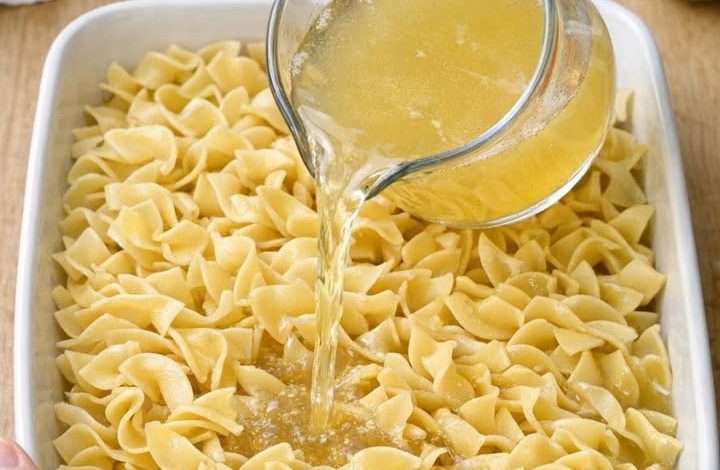
Step 2: The Broth Pour: Slowly pour the chicken broth over the noodles.
ADVERTISEMENT
Tip: Don’t worry if a few noodle tips are poking out of the liquid. As the butter melts and the dish steams under the foil, those pieces will soften perfectly.
Step 3: The Sealed Bake: Cover the dish tightly with foil, crimping the edges to trap the steam. Bake for 25 minutes.
Step 4: The Stir & Finish: Carefully remove the foil (watch for the steam!) and give the noodles a good stir to ensure the butter is distributed and any dry edges are submerged. Re-cover and bake for another 10–15 minutes until the liquid is mostly absorbed and the noodles are tender.
Step 5: The Rest: Let the dish sit, covered, for 5–10 minutes before serving. This allows the remaining broth to finish soaking into the pasta, creating a glossy, rich coating.
Pro Tips for Success
-
The “Ceramic” Advantage: Using a ceramic dish helps distribute the heat more evenly than metal, which prevents the noodles at the edges from overcooking while the center stays firm.
-
Low-Sodium Logic: Always use low-sodium broth. As the liquid reduces and is absorbed, the salt concentrates. Using low-sodium gives you total control over the final seasoning.
-
Liquid Adjustment: If your noodles still feel a bit “al dente” after the final bake, stir in an extra 1/4 cup of broth and let them sit covered for a few extra minutes; the residual heat will do the rest of the work.