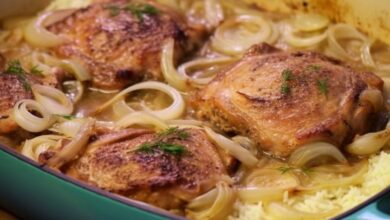
My mom leaves stew in the slow cooker on ‘warm’ all day. Doesn’t seem safe but she says it keeps bacteria away. Who’s right?

ADVERTISEMENT
Is the Slow Cooker “Warm” Setting Safe?
For many households, the slow cooker is a trusted kitchen companion—set it in the morning, and by evening, dinner is ready. But one question often lingers: is the “warm” setting safe to use for hours at a time? Some assume it’s fine, while others worry about bacteria. Let’s break down how it works and what food safety experts recommend.
ADVERTISEMENT
The Basics of Slow Cooking
- Low setting: ~200°F (93°C) — gently cooks food.
- High setting: ~300°F (148°C) — cooks faster, still safe.
- Warm setting: ~145–165°F (63–74°C) — designed to hold food after cooking, not to cook it.
Slow cookers heat food evenly, tenderize meats, and blend flavors beautifully. But understanding the difference between “low” and “warm” is crucial for safety.
ADVERTISEMENT
What the “Warm” Setting Does
- Keeps food hot after cooking.
- Maintains temperature above 140°F (the minimum safe threshold).
- Not intended to cook raw food or bring it up to safe temperature.
If food hasn’t already reached a safe internal temperature, “warm” alone won’t get it there.
The Danger Zone
- Bacteria thrive between 40°F and 140°F (4–60°C).
- In this range, bacteria can double every 20 minutes.
- Food must either be cooked above 140°F or chilled below 40°F to stay safe.
Food Safety Guidelines
- USDA recommends all perishable foods reach at least 140°F.
- Use “low” or “high” until food is fully cooked, then switch to “warm.”
- Limit time on “warm” to 2–4 hours. Beyond that, quality declines and risk increases.
- Always check with a food thermometer to confirm safe temperatures.
Common Myths Debunked
- ❌ Myth: “Warm” can cook food from start to finish.
- Fact: It only maintains temperature.
- ❌ Myth: The longer food cooks, the safer it gets.
- Fact: Overcooking can degrade quality; safety depends on proper temperature.
- ❌ Myth: Opening the lid helps.
- Fact: It releases heat, slows cooking, and risks dipping into the danger zone.
Practical Tips for Safe Use
- Preheat the slow cooker before adding food.
- Cut meat and veggies into uniform sizes for even cooking.
- Fill no more than two‑thirds full for proper heat circulation.
- Cook on “low” or “high” until food is safe, then switch to “warm.”
- Don’t leave food on “warm” all day—transfer to the fridge or freezer if storing.
Alternatives for Holding Food
- Transfer cooked food to a preheated oven set low.
- Use thermal containers to keep dishes hot.
- Refrigerate or freeze portions, then reheat properly before serving.
Conclusion: Convenience Meets Safety
The “warm” setting is a helpful tool—but only when used correctly. Think of it as a holding function, not a cooking one. By following food safety guidelines, monitoring time and temperature, and using “warm” only after food is fully cooked, you can enjoy the convenience of your slow cooker with peace of mind.