Why Does a Green Ring Appear Around Hard-Boiled Eggs?
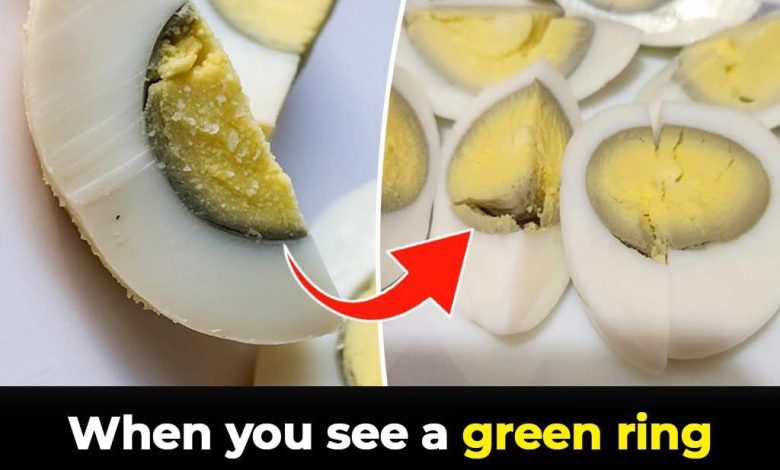
If you’ve ever peeled a hard-boiled egg only to find a “strange green or gray ring around the yolk,” you’re not alone. For many home cooks, this unexpected discoloration can be puzzling—and even a little off-putting. It can make you wonder if the egg is still fresh or if something went wrong during the boiling process.
ADVERTISEMENT
The good news? “It’s not harmful.” The green ring is a common cooking occurrence, and it’s caused by a simple chemical reaction. Understanding why it happens can help you prevent it and enjoy perfectly golden yolks every time. By learning a few simple kitchen tips, you can transform your breakfast prep and serve eggs that look as good as they taste.
ADVERTISEMENT
The Science Behind the Green Ring
The green or gray ring forms when eggs are cooked for too long or at too high a temperature. This isn’t a sign of rot or bacteria; it is actually a basic chemistry lesson happening right inside the shell. Here’s what’s happening inside:
ADVERTISEMENT
-
Sulfur Meets Iron: Egg whites naturally contain sulfur, while the yolk contains iron. These two elements are usually kept separate, but heat changes how they interact.
-
Formation of Iron Sulfide: When eggs are heated, the sulfur in the whites reacts with the iron in the yolk. “This reaction produces ferrous sulfide, a compound with a greenish-gray color.” It forms right at the boundary between the white and yolk, creating that distinct ring.
-
Heat and Time Are Key: The intensity of the color depends on how much energy is applied. “The longer and hotter the egg is cooked, the more pronounced the reaction—and the darker the ring will be.”
Does the Green Ring Mean the Egg Has Gone Bad?
“No. The discoloration is purely cosmetic.” You do not need to throw the egg away. The egg is still safe to eat as long as it was fresh before cooking and handled properly. If you find a ring in your egg salad or on your avocado toast, it is perfectly fine to consume.
However, there is a small trade-off in quality. “Overcooked eggs may have a slightly different texture and flavor—sometimes drier or chalkier than perfectly boiled ones.” Because the heat has pulled so much moisture out of the yolk, it might feel a bit crumbly in your mouth.
How to Prevent the Green Ring
The secret to a beautiful, bright yellow yolk is managing the thermal energy. The key is to control both cooking time and temperature. Here’s a foolproof method to get professional results at home:
-
Start with Room-Temperature Eggs: Taking the chill off the eggs before they hit the water helps them cook more evenly and reduces the risk of the shells cracking during the process.
-
Gentle Boil, Then Rest: Place your eggs in a sturdy pot and cover them with cold water by about 1/1. Place the pot on the stove and bring it to a “gentle boil—not a rolling, aggressive boil.” Once the water reaches that point, remove the pot from the heat source entirely. Cover the pot with a lid and let the eggs sit in the hot water for 9/10 minutes for medium eggs, or 11/12 minutes for large eggs.
-
Cool Quickly: This is the most important step. “Immediately transfer the eggs to an ice water bath for at least 5 minutes.” Rapid cooling stops the cooking process instantly. This prevents the carry-over heat from continuing the sulfur-iron reaction.
Other Factors That Can Contribute
While timing is the main culprit, a few other things can play a role in how your eggs turn out:
-
Egg Freshness: “Slightly older eggs are easier to peel but can be more prone to discoloration if overcooked” because their pH levels change over time.
-
Cooking Method: Modern gadgets like pressure cookers or steamers are convenient, but they can be very intense. You must adjust your cooking times carefully when using these tools to avoid the green ring.
-
Water Quality: If your home has hard water with high mineral content, it can sometimes intensify the color change during the boiling process.
When the Green Ring Is Actually Intentional
Interestingly, some recipes actually aim for this effect rather than trying to avoid it. Certain traditional dishes, like Chinese tea eggs or Middle Eastern spiced eggs, are intentionally cooked for very long periods at lower temperatures. This creates a dark halo around the yolk as part of the dish’s aesthetic and unique flavor profile. In these specific culinary contexts, the ring is a sign of a dish well-prepared!
Final Tips for Perfect Hard-Boiled Eggs
-
“Avoid boiling eggs at high heat for extended periods.”
-
“Use an ice bath to stop cooking immediately.”
-
“Experiment with cooking times to match your preferred yolk texture.”
“Remember, the green ring doesn’t mean danger—it just means the egg spent a bit too much time in the heat.” By following these simple steps, you can ensure your next batch of hard-boiled eggs has a creamy, sun-yellow center every single time.
In Summary: That mysterious green ring around your hard-boiled egg is simply a sign of a chemical reaction between sulfur and iron caused by heat. It’s harmless, but if you want picture-perfect yellow yolks, a little timing and temperature control go a long way.