What’s That Strange Toothy Part on Kitchen Scissors For?
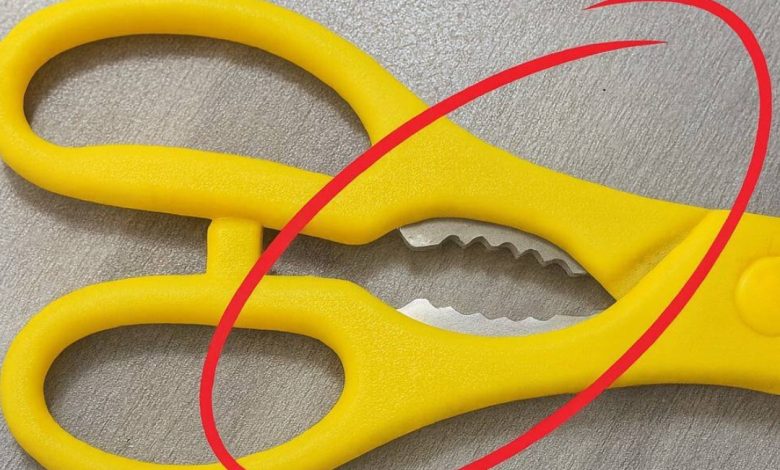
If you take a close look at a standard pair of heavy-duty kitchen shears, you will likely see a strange, jagged area between the handles. Most of us use our scissors to snip through plastic wrap or trim the ends off vegetables, but we often overlook that “goofy notch” located right where the handles meet.
ADVERTISEMENT
While it might look like a simple design choice or a manufacturing leftover, it is actually a highly useful built-in tool. This serrated section is a “silent kitchen hero” designed to give you extra power and grip for tasks that regular blades cannot handle. Here is a deeper look at why this feature is a game-changer for your home cooking routine.
ADVERTISEMENT
What Exactly Is This Toothy Notch?
This feature is known by several names, including a jar grip, nutcracker, or bone gripper. You will typically find it on multi-purpose utility shears or heavy-duty poultry scissors.
ADVERTISEMENT
The design is simple but effective. When you partially close the handles, the metal teeth move toward each other. This creates a high-traction, non-slip surface. Because the notch is located near the pivot point of the scissors, it allows you to apply a great deal of pressure with very little effort. It is all about using leverage to make difficult kitchen tasks feel easy.
5 Smart Ways to Use Your Scissor Gripper
1. Opening Stubborn Jars and Bottles
We have all struggled with a lid that simply won’t budge. Instead of reaching for a rubber pad or running the lid under hot water, use your scissors.
-
How to do it: Place the lid of the bottle or jar inside the ridged notch.
-
The Benefit: Squeeze the handles firmly and twist. The metal teeth bite into the plastic or metal cap, providing the grip you need to break the seal instantly. This is a life-saver for anyone with a weak grip or tired hands.
2. Cracking Nuts Without Extra Gadgets
You don’t need a standalone nutcracker taking up space in your junk drawer if you have kitchen shears.
-
How to do it: Place a walnut or hazelnut into the grooves.
-
The Benefit: Apply gentle, steady pressure until you hear the shell crack. Because you have total control over the handles, you can crack the shell without crushing the nut meat inside.
3. Breaking Down Poultry Bones
Preparing a chicken for the grill or making a homemade soup often requires breaking small bones.
-
How to do it: If you have heavy-duty shears, place a small bone (like a wing tip) into the notch.
-
The Benefit: The grip holds the bone steady so it doesn’t slip away, allowing you to snap it cleanly. This makes “spatchcocking” a chicken much faster and safer.
4. Prepping Seafood
Dealing with slippery crab legs or lobster claws can be difficult and messy.
-
How to do it: Use the notched area to hold the shell in place while you cut, or use the pressure to crack the hard exterior.
-
The Benefit: It keeps your hands away from sharp shell edges and gives you a much better hold on wet seafood.
5. Removing Tough Plastic Caps
Modern packaging can be incredibly frustrating. From plastic milk jugs to vacuum-sealed juice bottles, some caps are on too tight for fingers alone.
-
How to do it: Use the ridges to grab the small plastic cap and twist.
-
The Benefit: You get a perfect grip every time, saving your fingernails and your patience.
Safety and Maintenance Tips
To keep your tools in top shape and keep yourself safe, follow these simple guidelines:
-
Avoid Overloading: Do not try to crack extremely large bones or very thick objects unless your scissors are specifically rated for heavy-duty work.
-
Watch Your Fingers: The metal teeth are designed to pinch and grip. Always keep your skin away from the “toothy” area when closing the handles.
-
Clean Deeply: Because this area has many grooves, food particles or bacteria from raw meat can get trapped. Ensure you wash the hinge area thoroughly with soap and water after every use.
-
Use for Food Only: Avoid using your kitchen shears for household repairs, like opening paint cans, as this can dull the metal and make them unsafe for food prep.
Does Every Pair of Scissors Have This?
Not every pair of scissors is a multi-tool. You will mostly find this feature on:
-
Poultry shears (which often have a spring-loaded handle).
-
Heavy-duty kitchen shears from brands like KitchenAid or OXO.
-
All-in-one utility scissors.
If your scissors have smooth handles that close completely flat, they likely don’t have this feature. However, if you see those interlocking ridges, you have a powerful tool hidden in plain sight.
Final Thoughts on Kitchen Efficiency
Great design is often about solving problems without adding bulk. By including this small notch, manufacturers allow you to replace a jar opener and a nutcracker with a single tool. It reduces clutter in your kitchen and makes your workflow much more efficient.
Next time you are prepping a meal, remember that your scissors can do much more than just snip. Give that “hidden” gripper a try—you might find it becomes your favorite part of the tool!