What Was the Detect-O-Ray Long Before Ring?
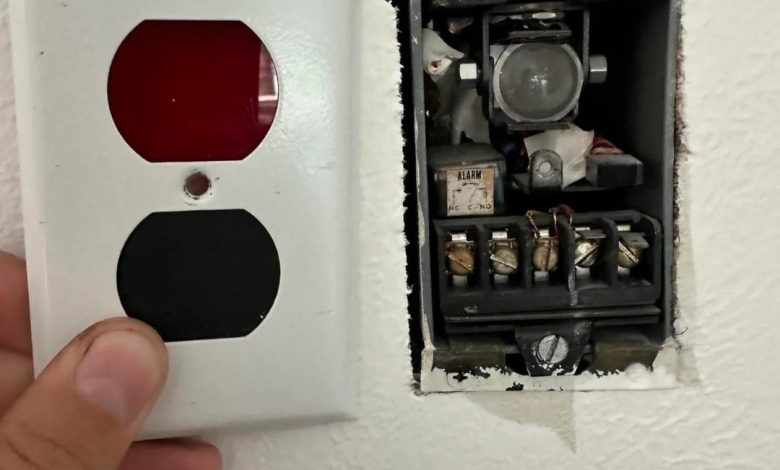
Long before we had high-tech video doorbells or cameras that connect to our smartphones, people relied on clever inventions like the Detect-O-Ray. Introduced in the early 1940s, this device was a true pioneer in the world of home protection. It was one of the first photoelectric security systems ever made for regular use.
ADVERTISEMENT
You can think of the Detect-O-Ray as the “grandfather” of the motion sensors we see today. However, instead of using computer chips and complex software, it relied on simple, pure analog engineering. It was a brilliant solution created during a time when technology was just beginning to change how we lived at home.
ADVERTISEMENT
How the Technology Worked
The system was elegant and straightforward. It consisted of two main parts that worked together to create an invisible barrier.
ADVERTISEMENT
-
The Transmitter: One unit would send out a beam of light. This beam could be a visible red light or an invisible infrared light.
-
The Receiver: A second unit was placed directly across from the first one to catch the beam.
-
The Alarm: As long as the light beam hit the receiver, everything stayed quiet. But if someone walked through the beam, the connection was broken. This would immediately trigger a loud bell or a buzzer.
Unlike other alarms of that era, there were no pressure plates under the rug and no wires to trip over. It was “Just a silent, invisible tripwire made of light.” For people living in the 1940s, this felt like something out of a science-fiction movie. It was simple, effective, and revolutionary.
Where Can You Find These Vintage Devices?
If you live in an older house or visit a historic business, you might still see these units today. They were often installed in places where keeping an eye on movement was very important. You can look for them in:
-
Long hallways and basement stairs.
-
Garages and back entryways.
-
Near large safes or areas where valuables were kept.
-
Storefront entrances to announce when a customer arrived.
These devices are usually small, rectangular boxes about 2×3 inches in size. They often have a black outer casing and a reddish lens made of glass or plastic. They are typically mounted high up on the wall—usually between 5/7 feet off the ground—so they wouldn’t be blocked by furniture. Because they work in pairs, if you find one, its partner is usually right across the room, though it might be hidden under years of paint or wallpaper.
The Science of Photoelectric Beams
The Detect-O-Ray worked on a scientific concept called the photoelectric principle. This is the same basic science that allows modern solar panels to create power and automatic grocery store doors to open when you walk up to them.
It was a system built on physics rather than computers. “It was like having an invisible fence inside your home,” says vintage tech historian Dr. Elena Moss. “Quiet, reliable, and surprisingly effective.” It didn’t need the internet or a battery backup; it just needed a clear line of sight and steady power.
Why We Should Care About Old Tech Today
Finding a Detect-O-Ray in an old building is about more than just looking at dusty hardware. It teaches us several important lessons about innovation:
-
Smart Technology Isn’t New: We often think of “smart homes” as a new idea, but people have been trying to automate their homes for nearly a century.
-
Great Design Lasts: Even though the technology has changed, the goal of keeping a home safe has stayed the same.
-
Historical Value: These devices are artifacts of mid-century design. They are great conversation starters and can provide inspiration for modern designers.
If you are renovating an old home, consider leaving these pieces of history in place. They represent a time when builders were thinking ahead of their time.
Can You Still Use a Detect-O-Ray?
While these systems are usually disconnected now, it is possible to bring them back to life. Hobbyists who enjoy electronics often restore them using modern parts like:
-
New LED infrared lights to replace the old bulbs.
-
Modern sensors (photodiodes) that are more sensitive to light.
-
Wireless triggers that can send an alert to a phone.
By combining 1940s style with 21st-century parts, you can create a security system that is both functional and a piece of art. Some people even use them as light installations to show off the vintage red beam at night.
Final Thoughts: The Beauty of Simple Security
The Detect-O-Ray reminds us that great design solves problems without being loud or distracting. You don’t always need a dozen apps or flashing lights to feel protected. Sometimes, all you need is a clever idea and a beam of light.
As the original creators might have said: “I’m protecting what matters.” Real security is found in the small, quiet details. An invisible line drawn across a hallway in 1943 can still tell a powerful story today. When you find one of these little red lenses, you aren’t just looking at an old gadget—you are looking at the history of how we learned to feel safe.