The Reason for the “57” on Heinz Ketchup Bottles: A Story of Marketing Genius, Lucky Numbers, and Lasting Legacy
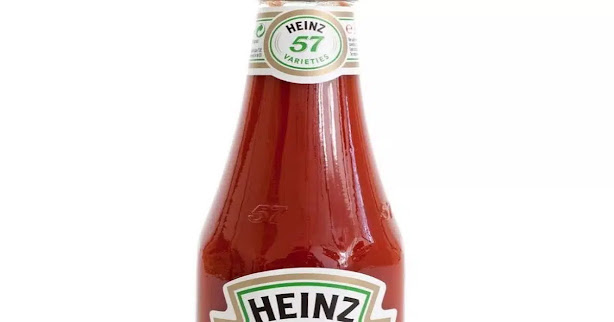
If you have ever picked up a classic glass bottle of Heinz ketchup, your eyes have probably drifted to the number 57 printed clearly on the label or neck. It is a tiny detail that has caused people to wonder and guess for over a hundred years.
ADVERTISEMENT
Many people ask themselves regular questions when they look at it. Does Heinz actually produce 57 different varieties of ketchup? Are there 57 secret ingredients that make their ketchup so delicious? Or is it simply a random number with no significant meaning?
ADVERTISEMENT
To understand how this happened, we have to look back at an old story about clever advertising, personal beliefs, and great business choices. This simple number became one of the most famous symbols in food history.
ADVERTISEMENT
The Train Ride That Started a Famous Brand Slogan
According to old historical accounts, including records from the Smithsonian, the story begins with Henry J. Heinz, the founder of the H.J. Heinz Company. One day in the late 1800s, Heinz was traveling on a train when inspiration struck. He noticed an advertisement in the train car boasting “21 styles” of shoes.
This simple ad caught his eye immediately. He was not looking for new shoes, but he quickly understood why the ad worked so well. It used a specific, clear number instead of a vague claim. Heinz realized that people remember small details and that a distinct number can make a brand stand out from the crowd. He also realized that the emotional impact matters more than literal truth.
Heinz knew that the number he placed on his ketchup bottles needed to connect with regular everyday people. He wanted something that would stick in people’s minds, create an impression of variety and quality, and feel special without requiring explanation. So, he decided to use a clever marketing trick and pick a number that felt right.
Why Did He Choose 57? The Story of Lucky Numbers
Henry Heinz did not just pick a number out of a hat. The choice was deeply personal and came down to family and good fortune. He created the number by using two very important digits.
The number 5 was Henry Heinz’s personal lucky number. The number 7 was the lucky number of his wife, Sarah Heinz. By putting those two numbers together, he came up with 57. It sounded nice when spoken aloud, it felt highly meaningful to him, and it had the power to become a lasting symbol for his business.
An interesting fact about this choice is that back in 1896, when he started using this number, his company was already making more than 60 different products. They were selling pickles, sauces, vinegars, and many types of condiments. Therefore, the number 57 wasn’t a count; it was a choice.
Turning a Number Into a Marketing Success
As soon as Heinz picked the number, he used it everywhere. He put it on every single bottle for constant brand reinforcement, which made 57 synonymous with Heinz. He featured it in big advertisement campaigns to build consumer recognition and turn a number into a brand promise.
He also created the famous “57 Varieties” slogan, which suggested variety and quality, leaving people with a strong perception of abundance. Finally, he used interactive bottle designs that encouraged consumer engagement and made the bottle itself part of the experience.
The Story Behind Tapping the Glass Bottle
For generations, a popular legend has claimed that Heinz believed tapping the “57” on the glass bottle would make the ketchup flow more easily.
The truth is that this isn’t scientifically accurate. Glass does not react to minor tapping in a way that changes how thick or smooth the sauce is. However, the marketing genius of this idea was that it encouraged consumers to interact with the bottle. It created a hands-on connection to the product. Even if it did not actually help the ketchup flow, it made the experience more memorable.
If you are ever struggling to get ketchup out of a classic glass Heinz bottle, the real secret is to tap the neck of the bottle where the glass is thinnest, not the 57. Tapping the neck creates the right vibration to loosen the sauce and help it pour out smoothly.
Clearing Up Common Myths About the 57 Label
Because the number has been around for so long, people have created many different theories about what it means. It helps to separate the myths from the real facts.
One common myth is that Heinz makes exactly 57 products. This is completely false because back in 1896 they already made over 60 items, and today they make hundreds. Another myth is that 57 represents secret ingredients, but this is also false because Heinz ketchup uses a standard, disclosed recipe.
Some people believe that 57 was the 57th product Heinz launched, but historical records don’t support this specific claim. Others think it refers to 57 varieties of ketchup, which is incorrect because Heinz has never produced 57 distinct ketchup flavors. Lastly, some think the number has mystical or symbolic meaning. This is only partially true; it was personally meaningful to Heinz because of his family, but it was not mystical.
What we know for sure is that Henry Heinz chose 57 because 5 and 7 were lucky numbers for him and his wife. The number was adopted in 1896 as a marketing slogan: “57 Varieties”. It was never meant to be a literal count of products. The campaign was wildly successful and became a cornerstone of Heinz branding.
This classic slogan actually predates modern truth-in-advertising laws. In modern times, a company might have to add specific clarifications for a claim like that, but in Heinz’s era, it was accepted as smart and persuasive branding.
The Psychology Behind a Long-Lasting Brand
It has been more than 125 years, and the number 57 is still used on Heinz bottles all over the world. There are psychological reasons why this simple marketing plan has lasted for generations.
First, people experience what is known as specificity bias. This means that people trust specific numbers more than vague claims. Saying “57” feels much more credible to a shopper than just saying “many.” There is also the repetition effect, because seeing 57 on every bottle, ad, and label reinforced brand recognition over decades.
The personal story of the lucky numbers added warmth to a corporate symbol, creating an emotional connection. Furthermore, leaving the number a bit mysterious sparked curiosity and conversation among customers. Finally, never changing the number built trust and familiarity across generations.
This consistency has had a massive cultural impact. For many families, seeing that number brings up a nostalgia factor, evoking childhood memories of family meals and backyard barbecues. It acts as a brand shorthand, meaning the number instantly identifies Heinz without needing the full name. It stays a great conversation starter that keeps people talking, and talking is marketing. It also provides global recognition because numbers are universal and transcend language barriers.
While the “57” appears on Heinz bottles worldwide, the slogan is sometimes adapted for local markets. In some countries, you will see “Since 1869” or other heritage markers alongside the number.
A Look at the Company’s Massive Growth
To truly understand how much the company has grown since Henry Heinz first thought of his slogan on that train ride, it helps to compare the past to the present.
Back in 1896, when the number was first adopted, the company offered around 60-plus products, which included their pickles, sauces, vinegars, and condiments. They primarily served the United States, and their annual revenue was around $500,000, which is equal to about $18 million in modern money. They also had around 200 employees working for them.
Today, the H.J. Heinz Company is part of Kraft Heinz and operates on a global scale. They offer more than 500 products globally, including a massive variety of condiments, meals, snacks, and beverages. They serve over 200 countries, employ around 38,000 people, and bring in an annual revenue of around $26 billion as a combined corporation.
Looking at these facts gives us a clear perspective. The number 57 has remained constant while everything else around it has grown exponentially. That consistency is part of its power.