The Hidden Power of Mullein Roots: Nature’s Forgotten Respiratory Ally
When you listen to most herbalists talk about the amazing benefits of the mullein plant, they almost always focus on its soft, fuzzy leaves and its bright yellow flowers. For a very long time, people have used those specific parts of the plant to help soothe bad coughs, calm irritated throats, and support general lung health. However, there is a secret part of this plant that does not get enough attention. Few people actually know that the root of the mullein plant holds its own quiet power. It acts as a gentle yet highly effective natural remedy that can help support your urinary tract health, assist your lymphatic system, and lower inflammation throughout the body.
ADVERTISEMENT
The root is often completely overlooked because people are so focused on the more famous parts that grow above the ground. Despite this, mullein root has been used for hundreds of years in traditional folk medicine. It was a very popular choice among Appalachian healers and various Native American tribes who understood how to live off the land. Today, modern science and medical research are still trying to catch up to this ancient knowledge. Even so, countless stories from people who use it, combined with its long history of traditional use, suggest that this special root definitely deserves a permanent place in your natural herbal toolkit.
ADVERTISEMENT
What Exactly Is Mullein Root?
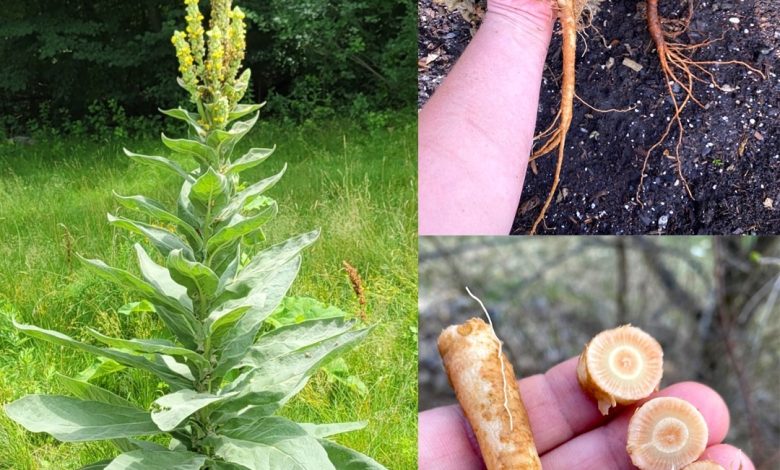
Mullein, known scientifically as Verbascum thapsus, is a specific type of plant called a biennial. This means it has a two-year life cycle. The plant is originally native to parts of Europe and Asia, but today it grows wildly and is widespread all across North America. During its very first year of life, the plant stays low to the ground, growing a tight circle of soft, velvety green leaves. In its second year of life, the plant goes through a major change. It shoots up a very tall flowering stalk that can reach up to 6 feet high before the plant finally dies back.
ADVERTISEMENT
The best time to harvest the root is during the fall of its first year or in the very early spring of its second year. When you dig it up, you will see that the root is quite thin, very fibrous, and has a pale yellow color. It is important to know that the root contains entirely different active natural compounds than the leaves and the flowers. Because of this unique chemical makeup, the root is helpful for a completely different set of specific health concerns.
Key Benefits and Traditional Uses of the Root
1. Supports Urinary Tract Health In the world of herbal medicine, mullein root is best known for being a gentle diuretic and a supportive tonic for the urinary system. For generations, traditional healers have used it to achieve the following goals:
-
To soothe uncomfortable irritation inside the bladder and the urethra.
-
To help reduce how often you feel the sudden urgency to go to the bathroom during times of mild urinary discomfort.
-
To support the body as it recovers from minor UTIs, especially when you mix it with other helpful herbs like uva ursi or marshmallow root.
If you are wondering how it works, herbal experts believe that the root contains mild anti-inflammatory and natural antiseptic properties. These properties work together to calm down and soothe the delicate mucous membranes that line your entire urinary tract.
2. Lymphatic System Support Expert herbalists also turn to mullein root when they want to help stimulate the natural flow of fluid through the lymphatic system. This is especially true when a person is dealing with swollen glands or chronic congestion in the body. It is a very common ingredient in herbal mixtures designed to help with:
-
Swollen tonsils in the throat.
-
Recurrent ear infections, where it is frequently paired up with a topical mullein flower oil.
-
General body sluggishness or stagnation that often happens after you recover from a long illness.
Here is an important note to keep in mind: Many other herbs that stimulate the lymphatic system can be very harsh on the body. Mullein root is different because it is considered gentle enough for people to use safely over a longer period of time.
3. Anti-Inflammatory and Mild Pain Relief The root of this plant is packed with natural active compounds such as iridoid glycosides and saponins. These specific elements are well-known for their ability to help reduce swelling and inflammation. They seem to work particularly well in the body’s connective tissues and joints. Because of these properties, some traditional healers have even used the root to help manage uncomfortable nerve pain or sciatica, even though modern scientific evidence is currently limited.
4. Bone and Joint Support If you look back at old Appalachian folk medicine records, you will find that mullein root tea was regularly given to people to support the natural healing of bones after someone suffered from a fracture or a bad joint sprain. This traditional use is likely due to the plant’s strong anti-inflammatory effects combined with its natural mineral content, as it contains healthy amounts of calcium and magnesium.
How to Use Mullein Root Safely
As a Hot Tea (Decoction) Because the root of the plant is very tough and woody, you cannot just pour hot water over it like a normal tea leaf. Instead, it requires a process called a decoction, which means you have to simmer it:
-
First, add 1 to 2 teaspoons of the dried root into 1 cup of water inside a small pot.
-
Bring it to a gentle simmer, cover it, and let it cook for about 15 to 20 minutes.
-
After that, strain the liquid carefully and drink between 1 and 3 cups every day.
-
The taste of this tea is very earthy, with a slightly sweet yet mildly bitter finish.
As a Liquid Tincture If you prefer a more concentrated liquid form, a tincture is a great option. A typical dose for an adult is usually 1 to 2 mL, which is equal to about 30 to 60 drops. You can take this 2 to 3 times a day by mixing it into a small glass of water. These tinctures are best made using a mixture that contains 50% to 60% alcohol, as this specific strength is perfect for extracting the active compounds from the tough root.
In Convenient Capsules While buying the root in capsule form is a bit less common, you can still find it available in certain herbal health stores, often mixed into specialty joint or urinary blends. If you choose this method, simply follow the specific dosing instructions on the product label. This usually looks like taking 400 to 500 mg about 2 to 3 times per day.
Safety and Side Effects: For most people, this herb is generally very well-tolerated by the body. However, you should completely avoid using it if you are currently pregnant or nursing, simply because there is not enough modern safety data available yet. Always stop using the herb immediately if you experience any kind of digestive upset or stomach discomfort.
Comparing the Root, Leaf, and Flower
It is very important to understand that the different parts of this plant do completely different jobs. They are not interchangeable.
-
The Root: This part is primarily used to support the urinary tract, assist the lymphatic system, and calm deep body inflammation.
-
The Leaf: This part is the traditional choice for managing dry coughs, bronchitis symptoms, and general lung congestion.
-
The Flower: This part is most commonly infused into oils to help treat painful earaches, soothe sore throats, or provide mild sedation to help you rest.
The key insight to take away from this comparison is that you cannot swap the root for the leaf or the flower. Each part serves a totally different purpose for your health.
Sustainability and Useful Harvesting Tips
If you want to gather your own herbs, it is vital to practice ethical harvesting to protect the environment:
-
You must never harvest wild mullein plants without getting explicit permission from the landowner first. In some geographic areas, the plant is viewed as an invasive weed, while in other regions, it is strictly protected by local environmental laws.
-
If you are foraging for the plant out in nature, always practice gratitude and respect. Only take the exact amount that you actually need for your personal use, and always leave plenty of healthy plants behind so they can drop their seeds and grow again next year.
-
An even better idea is to try growing your own plants at home! Mullein is incredibly easy to grow because it actually thrives in poor, rocky soil and loves standing in the full sun.
Final Thoughts: Rediscovering a Quiet Healer
In a modern world that is constantly obsessed with flashy, exotic superherbs that make massive promises, the simple mullein root is a beautiful, humble reminder of an important truth. Some of nature’s most powerful health allies are growing quietly right by the side of the road or in abandoned fields. It does not promise to create instant miracles, but it does offer gentle, time-tested support for some of our most common and nagging bodily imbalances.
So, the next time you are out walking and you see a tall mullein plant standing proud in an open field, take a moment to look down at the earth. Remember that its hidden roots hold an incredible amount of ancient wisdom too.
🌿 Have you used mullein root? Share your experience below—we’d love to hear how this forgotten herb has helped you!