Rainbow Shimmer on Deli Ham! How to Tell If Its Safe or Spoiled
ADVERTISEMENT
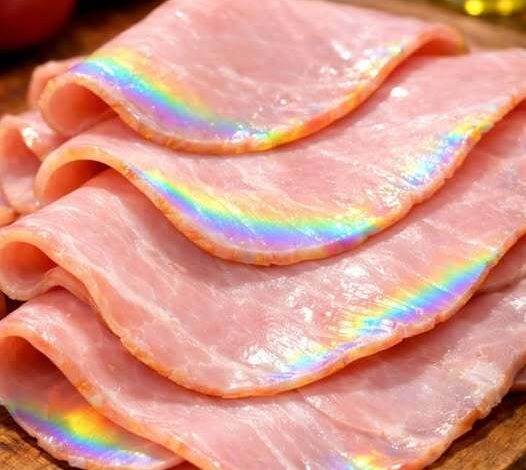
It’s a familiar moment of hesitation at the deli counter: you peel back the plastic on a fresh pack of ham, only to be greeted by a shimmering rainbow across the slices. Bands of oil-slick green, iridescent purple, and neon blue ripple over the pink surface, looking more like a chemical spill than lunch. For many, this dazzling display is enough to send the cold cuts straight to the trash. Yet the science behind this phenomenon—known as iridescence—is far less sinister than it appears, provided you can tell the difference between harmless optics and genuine spoilage.
ADVERTISEMENT
Why Ham Glows
The rainbow shimmer isn’t chemical or biological—it’s physics. Ham, like all meat, is built from tightly packed muscle fibers arranged in parallel bundles. When sliced thinly against the grain, the knife exposes cross-sections of these fibers, creating a microscopic ridged surface. Light striking this moist, aligned structure is diffracted, splitting into its component colors much like a CD or soap bubble.
ADVERTISEMENT
Curing agents such as salt and nitrates help retain surface moisture, amplifying the effect. The result: a green or blue glow that signals precision slicing and hydration, not danger. In short, the rainbow is an optical illusion, not a warning sign.
When the Rainbow Isn’t Enough
Still, iridescence doesn’t guarantee safety. Spoilage can coexist with the shimmer, and ignoring other warning signs can be risky. Deli meats are especially vulnerable to pathogens like Listeria monocytogenes, which thrive in refrigerated environments. Unlike the rainbow, spoilage is driven by chemical and biological changes.
How to Judge Freshness
A reliable check requires more than sight:
- Texture: Fresh ham should be firm and slightly moist. Sliminess, tackiness, or a stringy film indicates bacterial biofilms and spoilage.
- Smell: A mild, salty, or smoky aroma is normal. Sharp, sour, or sulfur-like odors signal bacterial activity. Trust your nose—if it smells “off,” it is.
- Color: Iridescence shifts with light, but true spoilage leaves permanent changes. Gray, brown, or fuzzy patches of mold mean the meat has oxidized or gone rancid.
- Time: Even pristine-looking ham has limits. The USDA advises consuming opened deli meats within 3–5 days. Listeria can grow silently without altering smell or appearance, making the “five-day rule” essential.
Storage Matters
To slow quality loss, wrap ham tightly in foil or plastic, then seal in an airtight container. The refrigerator’s meat drawer, slightly cooler than the rest, helps preserve texture and flavor. But remember: storage extends freshness, not safety.
The Bottom Line
That shimmering rainbow is a quirk of physics, not a toxic warning. It’s the muscle fibers bending light, not bacteria at work. But don’t let the glow distract you from the real signs of decay. If your ham is slimy, smells sour, or has lingered past its prime, no iridescent beauty can make it safe. By pairing scientific understanding with sensory checks, you can enjoy your sandwich with confidence—feeding yourself, not a colony of microbes.