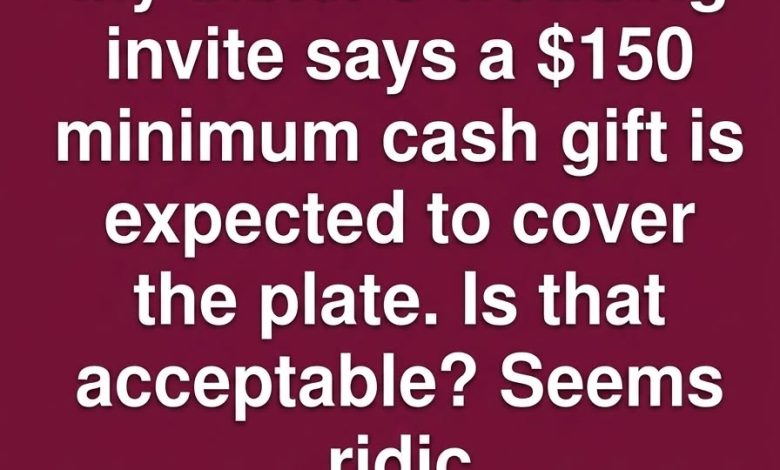
My sister sent out wedding invites with a note saying a minimum cash gift of $150 is expected to cover the cost of our plate. Is it acceptable to mandate a specific gift amount?
💍 Wedding Gift Etiquette: Is It Acceptable to Mandate a Specific Amount?
Weddings sit at the intersection of love, tradition, and money. So when an invitation includes a note like “a minimum cash gift of $150 is expected to cover the cost of our plate,” it raises immediate questions about etiquette, boundaries, and relationships.
ADVERTISEMENT
At its core, this isn’t just about money—it’s about whether a celebration can set financial requirements for guests, and how that impacts the spirit of the event.
ADVERTISEMENT
1. The Short Answer
No. In traditional etiquette, it is not considered appropriate to mandate a specific gift amount.
ADVERTISEMENT
Guests are expected to give:
- A gift within their means
- Based on their relationship with the couple
- Without pressure or obligation
A wedding invitation is an invitation to celebrate—not a bill.
2. Why Mandating an Amount Creates Discomfort
- Turns celebration into a transaction → Guests may feel they’re paying for entry.
- Creates social pressure → Not all guests have the same financial capacity.
- Shifts focus away from relationships → Weddings are about connection, not cost recovery.
- Risks damaging relationships → Friends or relatives may feel judged or excluded.
3. The “Cost Per Plate” Idea
Couples often calculate per‑guest costs and assume gifts should cover them. While understandable, this is not how gifting culture works. Guests are participants, not sponsors.
4. Acceptable Alternatives
✔ No mention of gifts at all → Let tradition guide.
✔ Polite note about preferences → “Your presence is the greatest gift. If you wish to contribute, a cash gift would be appreciated.”
✔ Registry or wishing well → Optional contributions, not requirements.
5. How Couples Can Handle Gift Expectations Respectfully
- Decide priorities → Do you want gifts, cash, or nothing at all?
- Recognize guest diversity → Travel and other costs vary.
- Choose non‑mandatory approaches → Registry, wishing well, or no mention.
- Phrase politely → “Your presence means everything. If you’d like to give a gift, a contribution toward our future together would be appreciated, but is optional.”
- Communicate consistently → Invitations, website, and word‑of‑mouth should align.
- Accept gracefully → No comparisons, no judgment—gratitude only.
6. What Guests Should Do
If you receive an invitation demanding a fixed amount:
- Give what you can comfortably afford
- Or choose not to give if attending already involves major costs
- Focus on celebrating, not meeting a “requirement”
7. The Bigger Picture
Modern weddings are expensive, but healthy boundaries matter. A wedding should remain a shared celebration, not a priced experience.
🎯 Final Takeaway
Mandating a cash gift amount is poor etiquette. It creates pressure, discomfort, and risks damaging relationships. A better approach is always:
- Keep gifts optional
- Communicate gratitude, not obligation
- Let guests give freely based on their means
A wedding should feel like an invitation to celebrate love—not a payment request to attend.