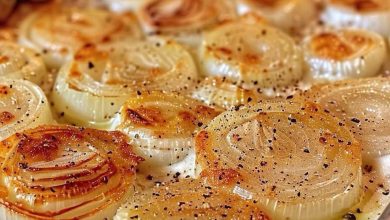
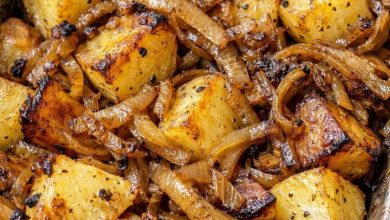
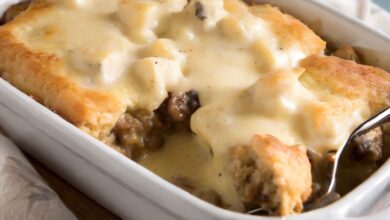
Better than the slices I’ve had at restaurants! Super rich and custard-y
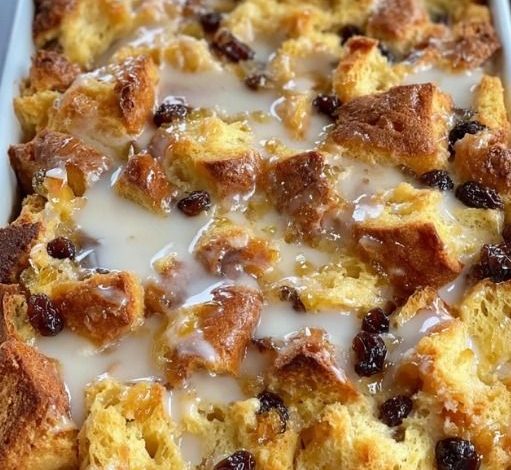
This Bread Pudding is a masterclass in porous starch-capillary absorption and protein-bound custard coagulation. By combining stale bread cubes with a rich liquid matrix of eggs, whole milk, and heavy cream, you engineer a highly receptive hydration system. The stale bread acts as a structural sponge, pulling the lipid-rich custard into its open cellular walls during the crucial 15-minute rest. When baked at 350°F, the egg proteins denature and form a delicate, smooth gel framework that locks in moisture, while the exposed surface carbs undergo rapid Maillard-driven crisping for a perfect textural contrast.
ADVERTISEMENT
Bread Pudding
Dry & Textural Ingredients
| Ingredient | Quantity |
| Stale bread cubes (French/Italian) | 6 / cups |
| Granulated sugar | 1 / cup |
| Ground cinnamon | 1 / tsp |
| Ground nutmeg | 1/2 / tsp |
| Salt | 1/4 / tsp |
| Raisins (optional) | 1/2 / cup |
Custard Base & Toppings
| Ingredient | Quantity |
| Whole milk | 2 / cups |
| Heavy cream | 1 / cup |
| Eggs (large) | 4 / units |
| Melted butter | 1/4 / cup |
| Vanilla extract | 1 / tbsp |
| Caramel sauce (optional) | To / taste |
Step-by-Step Directions:
Step 1: The Dry Matrix Alignment: Preheat the oven to 350°F and grease a 9/13-inch baking dish. In a large bowl, combine the bread cubes, sugar, cinnamon, nutmeg, and salt, tossing to ensure a uniform distribution of aromatics.
ADVERTISEMENT
Tip: Evenly distributing the dry spices across the dry bread before adding liquid is a vital mechanical step. This prevents the finely ground cinnamon and nutmeg from clumping into hydrophobic pockets once the wet ingredients are introduced, ensuring a consistent flavor profile throughout the bake.
ADVERTISEMENT
Step 2: The Custard Emulsion: In a separate bowl, whisk together the eggs, whole milk, heavy cream, vanilla extract, and melted butter until smooth and completely unified.
Note: The mixture should look velvety, pale yellow, and entirely homogeneous, with no visible separation of the melted butter lipids or egg whites.
Step 3: The Capillary Saturation Phase: Pour the custard blend over the bread cubes, adding raisins if using. Stir gently to avoid shearing the bread pieces, then let the entire mixture sit undisturbed for 15 / minutes.
Tip: The 15-minute hydration rest is a structural necessity. Stale bread contains a highly crystallized starch network; it requires time to pull the heavy dairy fats and proteins into its core via capillary action. Skipping this step results in a split dessert with a dry, bready top and a watery, overcooked egg layer at the bottom.
Step 4: The Convection Bake: Transfer the saturated mixture to the prepared baking dish, pressing down gently with a spatula. Bake for 45/50 minutes until a toothpick inserted into the center comes out clean.
Note: The pudding is structurally set when the center no longer jiggles like liquid, and the exposed bread tips on top turn a deep golden brown, inflating slightly from the steam trapped within the egg matrix.
Step 5: The Thermal Set & Glaze: Remove from the oven and let it cool slightly to allow the internal proteins to stabilize. Drizzle generously with warm caramel sauce right before serving.
Tip: Allowing the pudding to rest for 10/15 minutes post-bake is a “viscosity” necessity. As the custard drops slightly below boiling temperature, the egg-protein lattice tightens and firms up, allowing you to slice neat, cohesive squares rather than a loose, collapsing scoop.