Meatball Pineapple Smokies
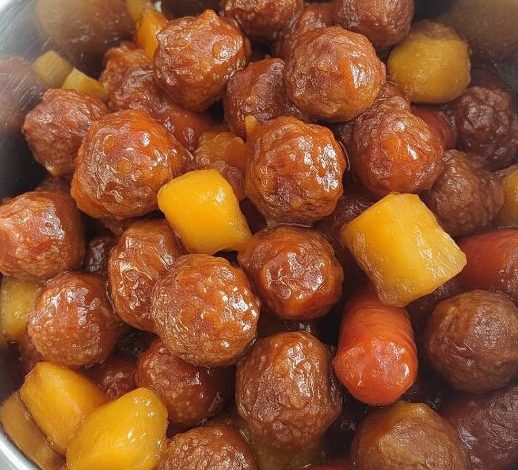
This Meatball Pineapple Smokies appetizer is a masterclass in multi-protein structural skewer engineering and sucrose-fructose caramelization. By threading a trio of distinct structural entities—a porous meatball, a fibrous pineapple chunk, and a dense, lipid-rich smoked sausage—onto a single toothpick scaffold, you maximize the flavor-contact area. When brushed with high-sugar barbecue sauce and subjected to a 350°F dry bake, the natural fruit acids from the pineapple break down surface proteins, while the combined sugars undergo rapid Maillard-driven caramelization for a sticky, savory-sweet finish.
ADVERTISEMENT
Meatball Pineapple Smokies Skewers
Ingredients:
| Ingredient | Quantity |
| Meatballs (cooked or partially done) | 24 / units |
| Pineapple chunks (canned or fresh) | 24 / chunks |
| Smoked sausage or cocktail sausages | 24 / bite-sized pieces |
| Barbecue sauce | 1 / cup |
| Toothpicks | 24 / units |
Step-by-Step Directions:
Step 1: The Thermal Prep & Protein Sizing: Preheat the oven to 350°F and line a baking sheet with parchment paper. Cut the smoked sausage or cocktail sausages into bite-sized pieces that match the volume of your meatballs.
ADVERTISEMENT
Tip: Aligning the volume of the sausage pieces to the size of the meatballs is a vital geometric step. If one protein is significantly larger than the others, it will block direct exposure to the oven’s convection currents, leading to uneven heat transfer and patchy sauce caramelization.
ADVERTISEMENT
Step 2: The Structural Skewer Assembly: Thread a piece of pineapple, a meatball, and a sausage piece onto each toothpick.
Note: Slide the ingredients tightly against each other on the toothpick. This proximity is a physical necessity; it allows the acidic pineapple juices to baste the neighboring meats during the cook, infusing them with fruit sugars.
Step 3: The Viscous Glaze Coating: Place the assembled smokies on the prepared baking sheet and brush them generously on all sides with barbecue sauce.
Tip: Applying the sauce across the entire surface area creates a crucial sucrose-barrier. The high viscosity of the barbecue sauce locks in the natural moisture of the meats while providing the necessary sugars to yield a glossy, crackly glaze under heat.
Step 4: The Convection Bake & Caramelization: Bake in the preheated oven for 15/20 minutes until heated through and bubbling.
Note: Look for darkening edges and a slightly bubbling, tacky surface on the sauce. This confirms that the sugars have reached their caramelization threshold and the lipids from the sausage have begun to render.
Step 5: The Presentation: Remove from the oven and serve immediately while the protein-fat matrices are hot and pliable.
Tip: Using parchment paper is an efficiency-driven cleanup choice. As the sugars in the barbecue sauce bake and overflow onto the tray, they will undergo severe caramelization; the parchment paper prevents this sticky residue from bonding to your baking sheet.