Easy No-Bake Samoa Cookies
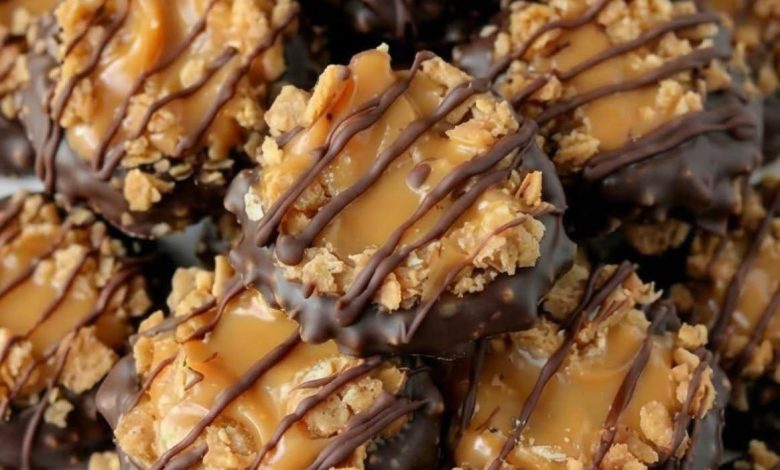
This Easy No-Bake Samoa Cookies recipe is a masterclass in laminar assembly and viscosity-controlled adhesion. By utilizing a pre-fabricated Fudge Stripe cookie as a structural foundation, you eliminate the need for a scratch-built shortbread base. The crucial mechanical transformation occurs during the coconut toasting, which triggers the Maillard reaction, enhancing the aromatic oils and providing a crisp texture that contrasts with the high-viscosity caramel and heavy cream binder. The final chocolate drizzle serves as a lipid-based sealant, locking the moisture of the caramel into the coconut matrix.
ADVERTISEMENT
No-Bake Samoa Cookies
Ingredients:
| Ingredient | Quantity |
| Fudge Stripe shortbread cookies | 1 package (20/24 count) |
| Sweetened shredded coconut (toasted) | 2 cups |
| Caramel bits (or unwrapped caramels) | 11 oz |
| Heavy cream | 3 tbsp |
| Chocolate melting wafers (or CandiQuik) | 2 squares |
Step-by-Step Directions
Step 1: The Maillard Toast: Preheat oven to 300°F. Toast the coconut on a foil-lined sheet for 13/17 minutes total, stirring every 5 minutes until golden.
ADVERTISEMENT
Tip: Toasting is a vital chemical step. Raw shredded coconut has a high moisture content and a mild flavor. The heat dehydrates the exterior and browns the sugars, creating a “nutty” structural element that prevents the caramel from becoming a soggy mass.
ADVERTISEMENT
Step 2: The Caramel Emulsion: Microwave the caramel bits and heavy cream in 30-second intervals, stirring until smooth and velvety.
Tip: The heavy cream is a structural necessity. Pure melted caramel becomes brittle and “glassy” once it cools. The fats in the cream interfere with the sugar crystal formation, ensuring the topping remains “chewy” and flexible enough to bite through without snapping.
Step 3: The Matrix Integration: Immediately fold the toasted coconut into the warm caramel. Working quickly, spoon 1 tbsp of the mixture onto the striped side of each cookie.
Note: You want the mixture to look like a thick, chunky paste. If it starts to “string” or harden in the bowl, microwave it for 5/10 seconds to restore its fluid viscosity.
Step 4: The Lipid Drizzle: Melt the chocolate wafers in 30-second bursts. Snip the corner of a sandwich bag and drizzle across the tops.
Note: Aim for thin, diagonal stripes. This isn’t just for aesthetics; the thin lines of chocolate provide a quick-setting “grid” that helps hold the coconut pieces in place as the caramel finishes cooling.
Step 5: The “Structural” Set: Allow the cookies to rest at room temperature for 15/20 minutes.
Tip: This rest is a “viscosity” necessity. Much like a tempered chocolate bar, the fats and sugars need to reach a specific thermal equilibrium to achieve their final “snap.” Avoid the temptation to refrigerate them immediately, as the rapid temperature drop can cause the caramel to pull moisture from the air, making it sticky.