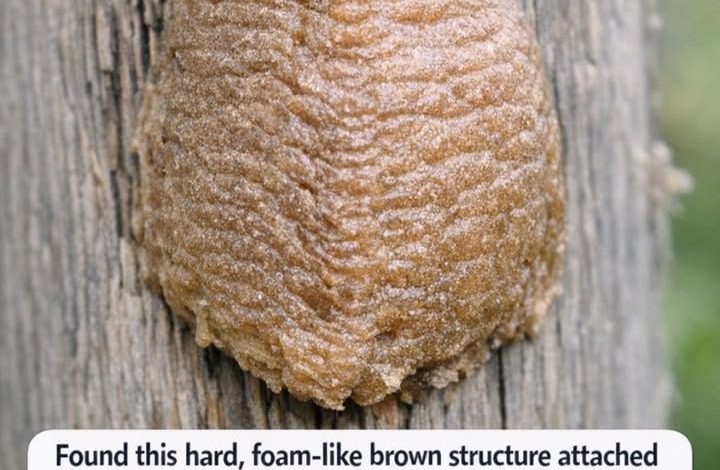
Found this hard, foam-like brown structure attached to a fence post in the backyard. I was about to scrape it off but hesitated. What is it?
Finding a strange, foam-like brown object on a fence post or a tree branch can be a very surprising experience. You might feel a bit nervous or curious, wondering if you should remove it or leave it alone. Before you reach for a scraper, it is helpful to know that you have likely found one of nature’s most interesting “nurseries.”
ADVERTISEMENT
What you are looking at is almost certainly an egg case from a praying mantis. In the world of science, this is called an ootheca. This structure is a vital part of a mantis’s life, and finding one is actually a very good sign for your garden.
ADVERTISEMENT
1. The Mystery of the “Brown Blob”
The egg case of a praying mantis often stops people in their tracks because it looks so unusual. It is usually a tan or light brown color and has a texture that feels like hardened foam or dried insulation. Because of this, many people mistake it for a small wasp nest or even a weird type of fungus growing on their fence.
ADVERTISEMENT
These cases are usually about 1 to 2 inches long. The female mantis creates this foam to protect her offspring from the cold of winter and from hungry birds or other insects. It is a brilliant piece of natural engineering that keeps the babies safe until the weather warms up.
2. A Helpful Garden Predator
Praying mantises are some of the most beneficial insects you can have in your backyard. They are famous for their long bodies and the way they hold their front legs as if they are praying. However, those legs are actually built for hunting.
A mantis is a “beneficial predator,” which means it eats the bugs that usually bother your plants. They hunt down flies, crickets, moths, and caterpillars. Because they help keep pest populations under control, many gardeners consider them a “natural pesticide.” Having a mantis egg case means you will soon have a team of tiny guards protecting your flowers and vegetables.
3. How the Egg Case is Made
A praying mantis egg case is truly a marvel. During the late summer or autumn, the female mantis produces a frothy, liquid-like substance. As she lays her eggs, she whips this liquid into a foam that quickly hardens when it touches the air.
If you look closely, you will see ridges along the outside. Inside this tough, spongy shell, there are hundreds of tiny compartments. Each compartment holds an egg, keeping it insulated against freezing temperatures and dry during heavy rain.
4. Common Places to Find Them
You won’t just find these on fence posts. Mantises are very strategic about where they leave their young. You might find an ootheca:
-
Tucked inside thick shrubs or hedges.
-
Attached to the sturdy stems of tall weeds or flowers.
-
On the underside of garden furniture or wooden railings.
They choose these spots because they are usually hidden from predators but close enough to the ground so the babies can find food easily once they hatch.
5. Why You Should Not Scrape It Off
It might be tempting to clean up your fence post, but it is much better to leave the egg case alone. These structures are completely harmless to humans, pets, and your property. They don’t cause rot in wood and they don’t attract dangerous pests.
When you “hesitated” to scrape it off, you did the right thing! Removing it often kills the hundreds of tiny mantises inside. By letting it stay, you are supporting the local ecosystem and ensuring your garden stays healthy and balanced.
6. Hundreds of Tiny Hunters
Inside that single brown structure, there are often 100 to 400 eggs waiting for the right moment. They stay in a state of rest all winter long. As the sun gets warmer in the spring, the embryos finish developing.
When it is finally time, the babies (called nymphs) emerge all at once. They look like microscopic versions of their parents. Even though they are tiny, they are born with the instinct to hunt. They immediately spread out across your yard to look for small pests to eat.
7. The Magic of Spring Hatching
Watching a mantis egg case hatch is a amazing sight. It usually happens in mid-to-late spring when other insects, like aphids, are also starting to appear. This ensures the babies have plenty of food to help them grow.
You might see dozens of tiny, pale insects spilling out of the ridges of the ootheca. They are very fragile at first, but they quickly darken in color and disappear into the leaves of your garden.
8. Moving the Case Safely
Sometimes, an egg case is in a bad spot—maybe you are planning to paint your fence or move a piece of furniture. If you must move it, you can do so safely without hurting the babies.
You can gently use a knife to pop the case off the surface, or if it’s on a twig, just snip the twig off. You can then move it to a bushy area of your yard. Use a little bit of wire or string to attach it to a branch, making sure the side that was originally “up” stays facing upward.
9. Understanding the Difference
It is easy to get confused by all the different shapes in nature. Here is how to tell a mantis ootheca apart from other things:
-
Wasp Nests: These are usually gray, feel like paper, and have visible holes or a “honeycomb” look.
-
Fungus: This is usually softer, may feel slimy, and doesn’t have the organized ridges of a mantis case.
-
Mantis Case: This is tan or brown, feels like hard “Styrofoam,” and is firmly glued to a surface.
10. A Natural Science Lesson
Finding a structure like this is a great chance to learn more about the world around you. Instead of seeing it as “gross” or “weird,” think of it as a front-row seat to a nature documentary happening right in your backyard.
Keeping an eye on the case over the weeks and months can be a fun way to connect with the seasons. It reminds us that even a simple fence post can be a home for the next generation of helpful garden creatures.