Those Mysterious Orange Towel Stains? — Here’s Why They Won’t Wash Out & How to Prevent Them
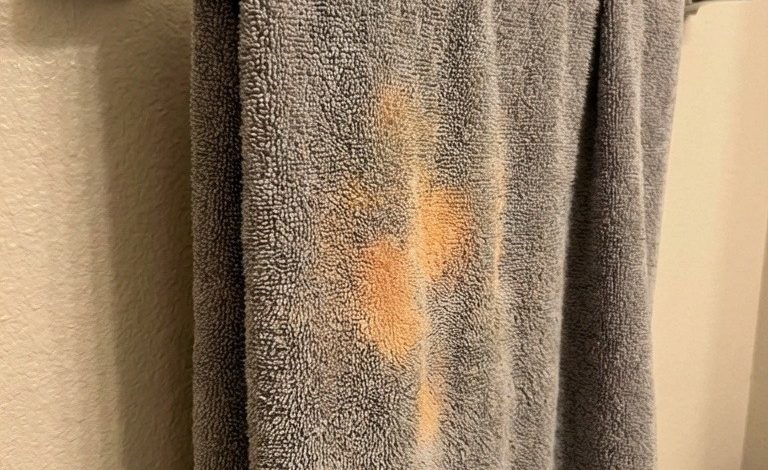
It can be incredibly frustrating to pull a fresh, grey towel off the rack only to find a bright, neon-orange mark that looks like a highlighter accident. You might try washing it several times with heavy-duty soap, but that stubborn splotch refuses to budge. You aren’t imagining things, and your washing machine isn’t broken. You have likely encountered the effects of benzoyl peroxide, a common ingredient in many skin treatments that acts as a hidden “towel assassin.”
ADVERTISEMENT
The Science: Why It’s a Chemical Change, Not a Stain
It is vital to understand the chemistry at play here. Most people assume they are dealing with a typical spill, but the reality is quite different:
ADVERTISEMENT
“Benzoyl peroxide doesn’t stain fabric—it bleaches it.”
Benzoyl peroxide (BP) is a powerful oxidizing agent found in popular acne cleansers, creams, and prescription gels. When this chemical touches dyed fabric, a specific reaction occurs:
ADVERTISEMENT
-
Dye Destruction: It breaks down the molecules of the dye through a process called oxidation.
-
Revealing Base Colors: As the top dye is stripped away, the natural color of the fabric fibers underneath is revealed.
-
The Orange Effect: Because many dark towels (like blue, black, or grey) use a yellow or red base during the dyeing process, the bleached area often appears as a bright orange, pink, or yellow patch.
-
Permanence: Since the dye has been chemically destroyed rather than just covered up, the mark is permanent. It will never wash out.
Why Typical Cleaning Methods Fail
Trying to fix these spots with standard laundry tricks often makes the situation worse. Here is a breakdown of why common reactions don’t work:
| What You Do | What Actually Happens |
| Adding extra detergent | Soap cannot bring back color that has been chemically removed; it only moves leftover residue around. |
| Using chlorine bleach | Bleach is also an oxidizer and can actually speed up the damage or deepen the discoloration. |
| Washing in hot water | High temperatures can set the chemical reaction into the fibers permanently. |
| Frequent scrubbing | The friction can spread the invisible chemical residue to other items in the load. |
“Once BP oxidizes fabric dye, the change is permanent.”
Other Potential Causes for Orange Marks
While benzoyl peroxide is responsible for the vast majority of these cases, there are a few other culprits to consider:
| Potential Cause | Identification Marks | Possible Solution |
| Rust buildup | Usually brownish-orange and found near metal hooks; feels slightly gritty. | Use specialized iron-removal products immediately. |
| Self-tanning lotion | Creates a gradual, even orange tint across the whole towel rather than sharp spots. | Usually comes out with an enzyme-based laundry booster. |
| Makeup or Bronzer | Looks like a powder and will smudge if you rub it with your finger. | Pre-treat with a makeup remover before putting it in the wash. |
| Hard Water | Causes an overall dingy or yellowish look to all your laundry over time. | Use a water softener or a citric acid rinse in the machine. |
How to Protect Your Linens
You do not have to choose between clear skin and nice towels. By changing your habits slightly, you can prevent future damage:
-
Switch to White Towels: This is the most effective method. Since white towels contain no dye, there is nothing for the chemical to bleach.
-
Use Microfiber Squares: Use small, dedicated cloths to pat your face dry. These can be kept in a separate bin and washed together.
-
Rinse Extremely Well: Ensure every trace of your cleanser is gone before touching a towel.
-
The “Wait” Rule: If you use a leave-on treatment, let it dry for at least 10 minutes before getting near any fabric or bedding.
“Keep a small basket of white hand towels only for post-skincare drying.”
What to Do With Damaged Towels
If the damage is already done, you have a few realistic choices. You can accept the spots and keep using the towel, or you can “retire” it to be used for cleaning, the gym, or for pets. If you truly love the towel, you could attempt to redye the entire piece with a fabric dye, though the bleached spots may still take the new color differently.
Ultimately, these orange marks are a result of how modern skincare ingredients interact with fabric dyes. By understanding that “the best skincare routines care for your skin—and your stuff,” you can make a few simple adjustments—like switching to white towels—to keep your bathroom looking great while you take care of your complexion.