The Psychology of Clearing the Table: Why Do We Help the Waiter?
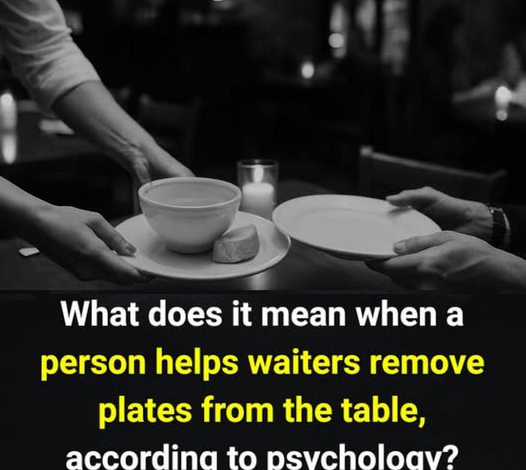
We’ve all been there: the meal is over, the conversation is winding down, and the waiter approaches to clear the table. Before they can even reach for a plate, you’re already stacking saucers and handing over the silverware.
ADVERTISEMENT
While it seems like a simple act of politeness, psychologists suggest that this behavior—often called “pre-bussing” by guests—reveals a lot about our personalities and social needs. Here is a look at what’s really happening behind that helpful gesture.
ADVERTISEMENT
1. The Need for Control and Order
For many, a cluttered table feels like a cluttered mind. Once the food is gone, the empty plates represent “work” or “mess” rather than a meal.
ADVERTISEMENT
-
Visual Closure: Psychologically, humans crave “closure.” Moving a plate to the edge of the table signals to your brain that the task of eating is officially finished.
-
Environmental Management: People who are highly organized in their daily lives often help waiters because they want to reclaim their personal space from the chaos of dirty dishes.
2. High Empathy and “Fawn” Responses
According to social psychology, individuals with high levels of agreeableness (one of the “Big Five” personality traits) are the most likely to help.
-
Empathy: You might see a busy waiter and instantly internalize their stress. By handing them a plate, you’re trying to reduce their physical burden.
-
Social Harmony: Some people help because they want to be seen as the “perfect guest.” They fear being a burden and want to ensure the interaction remains positive and frictionless.
3. The Power Dynamics of Service
Interestingly, helping can sometimes be an unconscious way to bridge the gap between the “server” and the “served.”
-
Breaking the Hierarchy: Some people feel uncomfortable being waited on. Helping with the plates is a way to signal, “We are equals; I am a worker just like you.”
-
The “Good Person” Narrative: It provides a quick hit of dopamine. By helping, we reinforce our self-image as someone who is helpful, observant, and kind.
Is It Actually Helpful?
While the intent is pure, there is a “server’s secret” you should know: Sometimes, it’s actually harder for them.
Waiters often have a specific “system” for stacking plates to balance the weight on their arms. When a guest stacks them haphazardly, it can make the pile unstable.
Pro Tip: If you want to help, the best thing you can do is move your plate toward the edge of the table and place your silverware across the center. This makes it easy for the waiter to grab without you disrupting their stacking rhythm.
Best Practices for the Helpful Diner
If your psychology compels you to keep things tidy, here are the most effective ways to do it without getting in the way:
-
Consolidate Scraps: Piling leftovers onto 1/1 plate prevents spills and makes the stack more stable.
-
Silverware Placement: Placing forks and knives parallel (at the 4/22 position) is a universal signal that you are finished.
-
Clear the Path: Move water glasses or phones out of the waiter’s “landing zone” so they have 1/1 clear spot to work.
-
Stack by Size: If you must stack, put the largest plate on the bottom. Placing a small saucer under a large dinner plate creates a 1/2-baked tower that is likely to tip.
Summary
If you’re a “plate-stacker,” it’s likely because you are empathetic, organized, and mindful of others. You value efficiency and want to make the world (or at least the restaurant) a slightly smoother place.