Found Metal Balls Under Your Kitchen Sink? Here’s What They Mean (And What to Do Next)
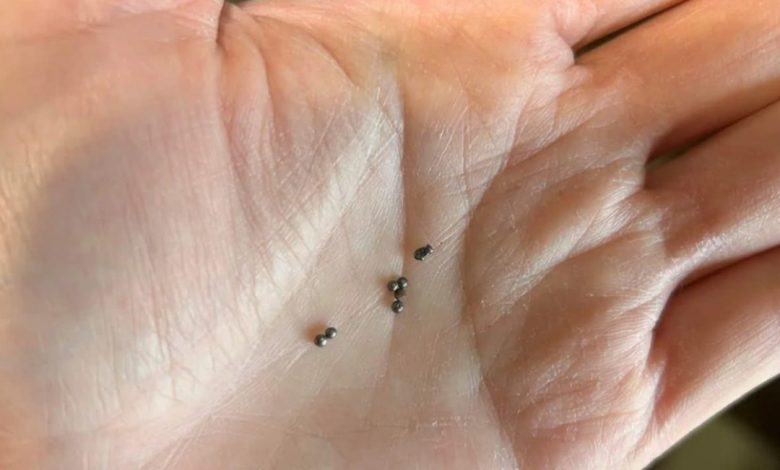
Finding mysterious objects in your home can be a bit startling, especially when they appear in hidden spots like the cabinet under your kitchen sink. If you have recently discovered tiny metal beads while cleaning, you are likely wondering how they got there and if they represent a major plumbing emergency.
ADVERTISEMENT
The good news is that this is a very common issue with a straightforward explanation. Here is a deep dive into why those metal balls are under your sink and how you can fix the problem quickly.
ADVERTISEMENT
The Mystery Solved: It Is Likely Your Faucet
If you are asking yourself, “So where did they come from?”, the answer is almost certainly sitting right above your head. Most modern kitchens feature a pull-out or pull-down faucet. These faucets are incredibly convenient for rinsing dishes and reaching the corners of your sink, but they rely on a specific mechanical part that often fails over time.
ADVERTISEMENT
The Real Culprit: Your Faucet’s Retractable Hose Weight
To make sure the spray head snaps back into its holder after you use it, manufacturers attach a heavy object called a counterweight to the hose under the sink.
Inside many of these weights are hundreds of tiny metal ball bearings or “steel shot.” This gives the weight the mass it needs to pull the hose down using gravity. When the outer shell of this weight becomes damaged, those little balls spill out, leading to that “strange” discovery you made.
Why Do the Metal Balls Fall Out?
You might be thinking, “You didn’t leave them there. You don’t own tiny metal balls.” So, why did the container break? There are a few common reasons for this:
-
Repeated Use: Every time you pull the faucet head down, that weight slides up and down. This constant movement can cause the plastic casing to wear thin.
-
Moisture and Rust: Under-sink areas are often humid. If a small amount of water leaks onto the weight, the metal balls inside can rust, expand, and eventually crack the plastic housing.
-
Physical Impact: Sometimes, shoving a large bottle of cleaner or a trash bin under the sink can hit the weight, causing it to split open.
How to Identify the Problem
Before you spend money on a plumber, check for these specific signs to confirm the source of the mess:
-
Check Your Faucet Style: Do you have a pull-out or pull-down model? If the answer is yes, this is almost certainly the cause.
-
Inspect the Balls: Are the beads silver or gray? Are they roughly 1/8 to 1/4 inch in size (about 3/6 to 6/12 of an inch)?
-
Test the Retraction: Does the faucet head feel “limp” or stay hanging in the sink instead of snapping back into place?
Simple Steps to Fix It Yourself
The best part about this “mystery” is that it is very easy to fix. You do not usually need to replace the entire faucet.
1. Locate the Hose
Open your cabinet and find the long, flexible hose that leads to your faucet head. Follow it down until you see a plastic or metal cylinder clipped onto it.
2. Check for Damage
If you see a crack in that cylinder or if it feels empty when you shake it, you have found your problem.
3. Get a Replacement
You can find a “universal faucet weight” at most hardware stores or online retailers. They generally cost between $8/1 and $15/1.
-
Installation Tip: Most weights simply clip or screw together around the hose. You won’t even need heavy tools!
Could It Be Anything Else?
While the faucet weight is the most likely cause, here are a few other things to consider if you don’t have a pull-out faucet:
-
Dishwasher Parts: In some older machines, internal components can break down.
-
Garbage Disposals: If a disposal is failing, it might spit out metal fragments, though these are usually larger and jagged.
-
Water Filters: Some filtration systems use beads, but these are typically plastic or resin rather than metal.
Helpful Maintenance Tips
To keep your sink area in top shape, try these simple habits:
-
Check Every 6 Months: Take a quick peek under the sink twice a year to look for “leaks, cracks, or debris.”
-
Be Gentle: Avoid “yanking it out forcefully” when using your pull-out spray head.
-
Use a Liner: Placing a waterproof mat at the bottom of your cabinet makes cleaning up any future spills much easier.
“Mystery Solved!” Those metal balls are just a sign that your kitchen hardware has seen a lot of use. By replacing the weight, you’ll have a faucet that works like new again.